


Read an extract from 'Sleeping Children' by Anthony Passeron
'Without ever raising your voice, you have shattered the family silence that scabbed over tragedy and produced a work so powerful, so moving that it lingers long after reading. Magnificent!'
- Annie Ernaux, winner of the Nobel Prize in Literature
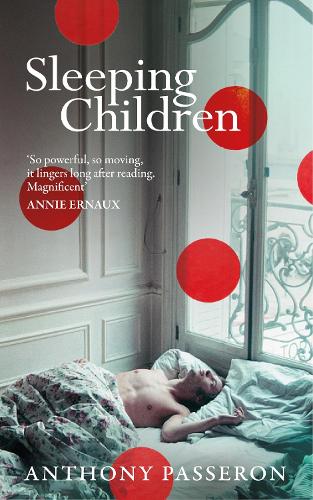
For readers of Édouard Louis, Douglas Stuart and Annie Ernaux, Sleeping Children by Anthony Passeron is a moving and eye-opening book about shame and the slow poisoning of a family by the secrets it keeps. Exploring the stories of the heroic few who fought for a cure for AIDs and for justice for a community abandoned, it is a radical vision of a history reshaped, retold and remembered. Read an extract here:
Sleeping Children Extract
by Anthony Passeron (tr. Frank Wynne)
My father never talked about that part of his work. Yet it was the basis of the family’s reputation. Whenever I’d ask him to explain how it worked, he’d just say that you had to act quickly. Not because it was a complicated procedure, but because you didn’t want to stress the animals. If you did, the meat would be spoiled. He used to say that the cattle shouldn’t have to suffer for nothing.
The breeder brought the first cow down from the truck. Lowing in the darkness, the others waited their turn. Leading the animal on a rope, the breeder guided it through a narrow path lined with metal barriers, whispering into its ear and patting it on the back to keep it calm. Pierre, the family ‘employee’, followed close behind. Émile and my father were waiting at the other end, in a huge, white-tiled room in the glare of fluorescent tubes. Rails mounted on the ceiling were hung with hooks on which the cattle were bled out. When he reached the end of the lane, the farmer would jerk the rope, pinning the cow’s head against the barrier. At this point, my father’s knife would flash. Quickly, precisely. He would swiftly cut the carotid artery so the animal would die without a struggle, without even realizing it was being slaughtered. This was better for all concerned. Once the bleeding was done, the animal was hung upside down to be gutted.
While the hanging carcass still shuddered with violent convulsions, my grandfather and father used their knives to cut away the organs. Then Pierre would push the eviscerated carcass along the rail and into the cold room, while the breeder went to fetch the next victim from the cattle truck. There could be no let-up, not until the last animal had been bled.
When the lowing finally subsided and the night was once more silent, everyone would troop outside for a break. Covered in blood and sweat, they would share bread and cheese and a flask of coffee under the stars. Sitting on the running boards of the cattle truck, they would trade news from neighbouring farms and villages. The local breeders congratulated the butcher who had taught his son to slaughter so well. This was why they came here: because their animals would be slaughtered better than anywhere else.


Sometimes, a yellow BMW with the radio blaring was parked between the trucks. The butcher’s other son coming home from the coast. He’d spent the whole night partying. In his velvet suit and patent-leather shoes, he had been on a pub crawl with his friends through the seaside bars. The abattoir was located on the outskirts of the village, so he would stop off for coffee with his father before going to bed. Émile would proudly introduce his eldest son to the few farmers who didn’t already know him. Désiré would light a cigarette and recount the night’s escapades. Under his younger brother’s admiring gaze and with his father’s blessing, he would regale everyone until his audience had to get back to work. Then he would disappear, wishing good night to men who would not have one.
Désiré was the favourite son. This was often the case with brothers in the valley: the first son was spoiled; he enjoyed a special status, as though the individual attention he’d received before his brothers and sisters arrived never quite wore off. Émile was simply following his parents’ example. Such things went unsaid, but my father, a second son, talked to me about them sometimes. He justified the way he had reared me and my brother, explaining how important it was that we were loved and treated equally. As though this had been the root cause of the tragedy. The way his parents had raised Désiré had become an example to be avoided. One day, when I refused to take the bins to the end of the street, claiming it was my brother’s turn, he had a rare angry outburst. He told me about his childhood, how his parents always expected him to do the thankless chores they spared his elder brother: ‘Désiré always had new clothes that couldn’t get dirty, but since I only got his hand-me-downs, I could stack the wood in the garage, clean the back kitchen or take out the rubbish. When he put on a new jumper, I was even expected to carry his satchel on the walk to school!’ Then, as he had said so often, he added: ‘There are no favourites in my house.’ Only much later did I understand the reason for this obsession, which, without saying as much, criticized his parents’ style of childrearing and blamed them for his brother’s fate.
At a young age, my father made himself indispensable in the butcher’s shop. He was eager to please his parents and insisted on taking up his father’s profession as soon as possible. Although he got excellent marks at school and his teachers encouraged him to carry on with his studies, he flatly refused. So determined was he that he got permission to leave school early. And so, at the age of fifteen, he gave up his boyhood in order to work. His whole life was consumed by the butcher’s trade. He would get up at four in the morning and go everywhere his father went: to the slaughterhouse, to the shop, out on his rounds. While he was already living the life of an adult, his friends were going to school and spending their holidays partying. At Saturday night dinners, his eyes would close in the middle of a conversation. His head would gradually droop onto the table. Someone had to wake him for dessert. At first light, he would be up and out so he could be at the butcher’s shop by dawn, when his friends were only just trudging home to bed. Little by little, he stopped talking about anything other than work and the hours he put in during the week. People called him a ‘grafter’, and this was his pride and joy. Customers, deliverymen and wholesalers praised his enthusiasm and envied his parents their devoted son. On Sunday afternoons, his shattered body would slump on the sofa. He would fall asleep watching American cop shows.
Meanwhile, his elder brother was discovering that a different life existed, far from the valley and the butcher’s shop. The village school only taught pupils up to the age of fifteen, so Désiré went to study at Parc Impérial, a secondary school in Nice, setting off on the first train every Monday and boarding at the school during the week. Here, the cheerfulness and self-assurance fostered by a childhood lavished with praise and affection made him a natural leader. He was funny, high-spirited and made friends easily.
So, the eldest son moved into uncharted territory, filled with places and people known only to him. In the valley, his family were aware of everything that happened, but the greater part of his life was now being played out on a stage to which no one but he had access.


Désiré would come home on the Friday evening train. He would have dinner with his family then go to the cafe to meet up with his friends and tell them about his adventures in the big city. His parents had too much respect for his schoolwork to ask him to work in the butcher’s shop at weekends. Besides, he didn’t need to, since his younger brother already worked there. So, they simply told him not to do anything stupid. My uncle’s freedom lay in escaping his family.
He was the first person in the family to pass the baccalauréat. For his mother, who had never studied beyond primary school, and his father, who had only a training certificate in butchery, the baccalauréat was a source of great pride. Désiré was impatient to be completely independent, so decided not to take his studies any further. The village solicitor was looking for a secretary. When Désiré showed up, he was hired on the spot. My uncle quickly moved into his own apartment, above the cafe on the village square.
Everything was going exactly as his father and mother had wished. Their eldest son had an education and a respectable office job. Their next son, the more practical and diligent, would carry on the business that had made their name.

Anthony Passeron was born in Nice in 1983. He teaches French Literature and Humanities at a secondary school. Les enfants endormis (Sleeping Children) is his first novel.