

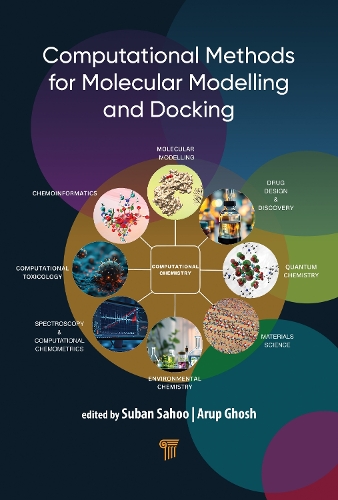
Computational Methods for Molecular Modelling and Docking
Synopsis
Computational chemistry is a fast-growing field, and computational tools are used in diverse areas, such as drug design and discovery, catalysis, materials science, and bioinformatics. The tools of computational chemistry, such as molecular mechanics, density functional theory, ab initio and semi-empirical methods, and molecular docking and dynamics, are being widely used for molecular modelling to calculate molecular geometries, electronic and thermodynamic properties, kinetics and transition states, spectra, and several other properties. With the advancement of computational technologies and the availability of user-friendly software, the ease with which computational calculations can be done even without any knowledge of the underlying principles has attracted people, including theoreticians working in other fields, to start using computational chemistry. Nevertheless, it becomes very important for a researcher to understand what computational methods can predict and what they cannot. Hence, some basic theoretical knowledge is essential for utilizing the various tools of computational chemistry to reduce the computational time and computational search space and refine their results. This book provides a basic understanding as well as relevant examples in the field of molecular modelling and docking, which will benefit a wide range of readers, including students (undergraduate, graduate, and post-graduate), new researchers, established scientists, and academicians.
Publisher information
- Publisher: Jenny Stanford Publishing
- ISBN: 9789815352252
- Number of pages: 344
- Languages: English
Customer Reviews
You may also like...