


Eight Great Crisp Cameos on Page and Screen
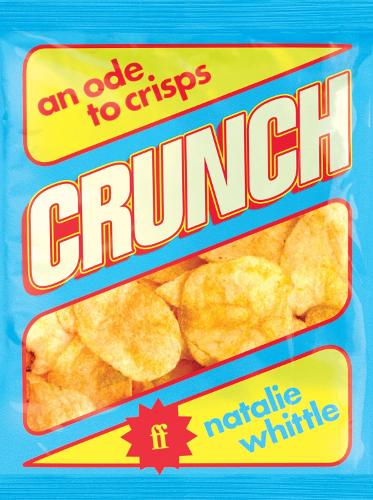
Crunch: An Ode to Crisps is a joyous celebration of the nation's favourite snack. From hula-hoops to hand-cooked, taytos to torres, this crisp-tory of Britain is a gloriously geeky, fabulously fascinating examination of a national obsession.
Here, the author guides us through some of their favourite crisp cameos on page and screen, from Adrian Mole to Kamala Harris, Trainspotting to Seinfeld.
Eight Great Crisp Cameos on Page and Screen
by Natalie Whittle
1. Adrian Mole and crisp secrets in Leicester
When you consider how addicted Britain is to crisps, the nation produces mysteriously little detail about its beloved snack in fiction. An exception to this rule comes courtesy of author Sue Townsend, who, like Walkers Crisps, is a Leicester native. In Adrian Mole and the Weapons of Mass Destruction, the sixth A.A. Mole instalment, Townsend offers a ‘company town’ insight via the character of Ken Blunt, who is a fellow attendee of Adrian’s Leicestershire and Rutland Creative Writing Group.
Ken hasn’t had time to write anything for the meet-up, he says, since 'he had been doing double shifts at Walkers Crisps. They are introducing a new line.' When quizzed as to what this creation will be, Ken says he is sworn to secrecy – 'I’ve signed a confidentiality agreement,' he boasts, to which group member Gladys replies 'It’s hardly Tinker, Tailor, Soldier, Spy, is it? It’s only a few bleeding crisps.'
If only, Gladys! In reality, Big Crisp really is extremely paranoid about factory spies and leaks. This may partly explain why we haven’t yet had the Great British Crisp Novel.

2. Mary Antin and kettle chips on the beach
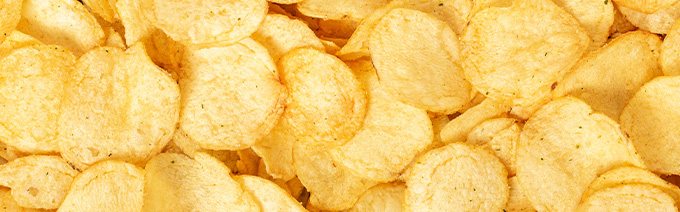
Mary Antin’s classic memoir The Promised Land (1912) tells the story of her childhood passage from Polotsk in eastern Europe to a new life on the east coast of America. It also captures a detailed description of potato chips being hand-cooked in small batches in a ‘kettle’ pan, which Mary observed at Crescent Beach, near Boston, where her father ran a tuck shop with his business partner Mr Wilner:
'Thin as tissue paper, crisp as dry snow, and salt as the sea – such thirst-producing, lemonade-selling, nickel-bringing potato chips only Mr Wilner could make.'
I hope this image will now appear in my brain any time I’m on a sunny beach. (Which is rarely.) Forget ice cream: what I really want is freshly fried crisps doused in sea salt.

3. Larry David and the chips of indolence
You’re lying on a hotel bed watching daytime TV in your comfy clothes, eating a huge packet of crisps. Have you given up on life, or have you in fact cracked the secret to living well? This is the question posed at the beginning of Curb Your Enthusiasm’s Season 2 opener ‘The Car Salesman’, in which Larry and his wife Cheryl are living in a hotel while they look for a new home. Larry, unmotivated to leave the hotel room, is making Cheryl impatient. ‘Every time I walk in here you’re just sitting here with your chips,” she says. “Are you ever going to work again? You’re in the prime of your life!’
Larry does find a job shortly thereafter, as apprentice salesman in a Toyota showroom. He proves to be terrible at selling cars, but in the most endearing way (what’s GTS? asks a customer; “Guaranteed tremendous safety” replies LD). The ultimate moral is timeless – that overeating big bags of crisps often precedes mysterious personal galvanisation.
4. Katherine Stansfield’s guide to crisp sandwich making
To assemble a crisp sandwich is not an easy thing to master. Cornish-born and now Wales-based novelist-poet Katherine Stansfield produced an entire poem about this artform, ‘How to Make a Good Crisp Sandwich’, in her collection Playing House. With the excellent opening salvo of “A ground rule: crisps don’t work alone”, Stansfield goes on to discuss the points on which a crisp sandwich stands or falls “You need a greaser… Bread must be firm… Think texture. Think noise”. But the real genius of the poem comes in its lines of preface.
“For the stranger on the train to Birmingham who watched but never asked”
If you don’t immediately relate to the scene this conjures, you haven’t spent enough time on Britain’s railway network, and therefore you can’t possibly hope to understand Britain itself.

5. Trainspotting and crisp acoustic torture
Begbie, the violent, psychotic wit of Irvine Welsh’s tour de force Trainspotting, is shown in Danny Boyle’s 1996 film adaptation to have a short and spectacular temper. Boyle uses a device that isn’t in the book itself – namely Begbie’s reaction to the challenging sound of a stranger eating crisps, which triggers a misfire as he cues up a pool shot. The man noisily tucking into a packet of Tudor Crisps at a nearby barstool finds himself beaten up for his trouble.
A person’s tolerance for crisp-eating sounds says a lot about their state of mind, dramatically speaking. In the Season 1 opener of After Life, Ricky Gervais’s grieving widower Tony is at his lowest ebb, and cannot handle the sound of a pub goer chomping what looks like a packet of smoky bacon.
“f&!#ing hell, can you hear that? f&!#ing fat c&!t eating like a f&!#ing slug.”
“They’re crisps, they’re crunchy,” his friend offers by way of reason. But Tony is too distressed to hear him.
6. Kamala Harris and her ‘go-to’ Doritos
Barack Obama preferred almonds. Donald Trump stocked up on Lay’s. And now we know that, should Kamala Harris be elected as president in November, her snack of choice at the White House would probably be Dorito’s. At a campaign stop in swing state Pennsylvania, Harris and team ducked into a Sheetz convenience store for a “normal people” meet and greet. Harris wanted to pick up some Dorito’s, she said, which her husband Doug dutifully found for her. She told store staff that her “go-to” was the Original Nacho Cheese flavour, but given that Pennsylvania produces some daring crisp ideas, such as Chester County-based Herr’s spicy pickle or sweet onion ‘Sandwi-Chips’ flavours, designed for crisp sandwiches, perhaps it would not have been too risky to have picked something bolder.

7. George Costanza and the ‘double dip’ controversy
In Seinfeld Season 4’s Episode 18, ‘The Implant’, we learn about society by observing a funeral party buffet. George Costanza has accompanied his lukewarm date Betsey to her aunt Clarisse’s wake in Detroit, where he sticks like any sensible stranger would, very close to the snack table. This unfortunately gives Betsey’s brother Timmy a chance to size up his sister’s suitor. He doesn’t much like what he sees.
George, he concludes, is a ‘double dipper’ – one who dips the chip, takes a bite, and then shockingly dips again. ‘That’s like putting your whole mouth right in the dip.’ George believes he is free to be the author of his own chip rules: ‘You dip the way you wanna dip, I’ll dip the way I wanna dip.’ But the world doesn’t work that way: judgmental Timmy starts a fight that ends with George being booted from the house (and the relationship) by Betsey. A crunchy fable of ‘your way versus my way’.
8. Peggy, Don and Sterling Cooper Pryce’s Mad Men adventures in potato chips
The Utz potato chip account proves extra salty for the Madison Ave bunch. In ‘The Benefactor’ (S2, Episode 3), the agency is shooting a TV campaign on behalf of the (real-life) Pennsylvania brand. Investment in TV advertising was key, postwar, to regional crisps becoming household names. In this case, Jimmy Barrett, an unpleasant comedian, feels he is better than the punchline he’s been paid to deliver: ‘Take it from a nut, Utz are better than nuts’, and also above politeness to Mrs Schilling, Utz’s first lady of crisps.
At the other end of the pay scale, we see Peggy Olsen in ‘Indian Summer’ (S1, Episode 11) on a blind date with Carl, a truck driver for Wise Potato Chips. Displaying her hunch that she is superior, she instead reveals her immaturity. Carl, we learn, is already his own boss, having bought his own sales route: ‘Expensive, but the hard part was learning that truck’. When she mentions the agency’s Utz account, he asks if they get free crisps ‘I do’, he says gleefully, to which Peggy pooh-poohs ‘I don’t know, I don’t like potato chips’. Don’t knock it: Herman Lay of Lay’s fame himself started out as a chip salesman-driver in his Model T Ford.
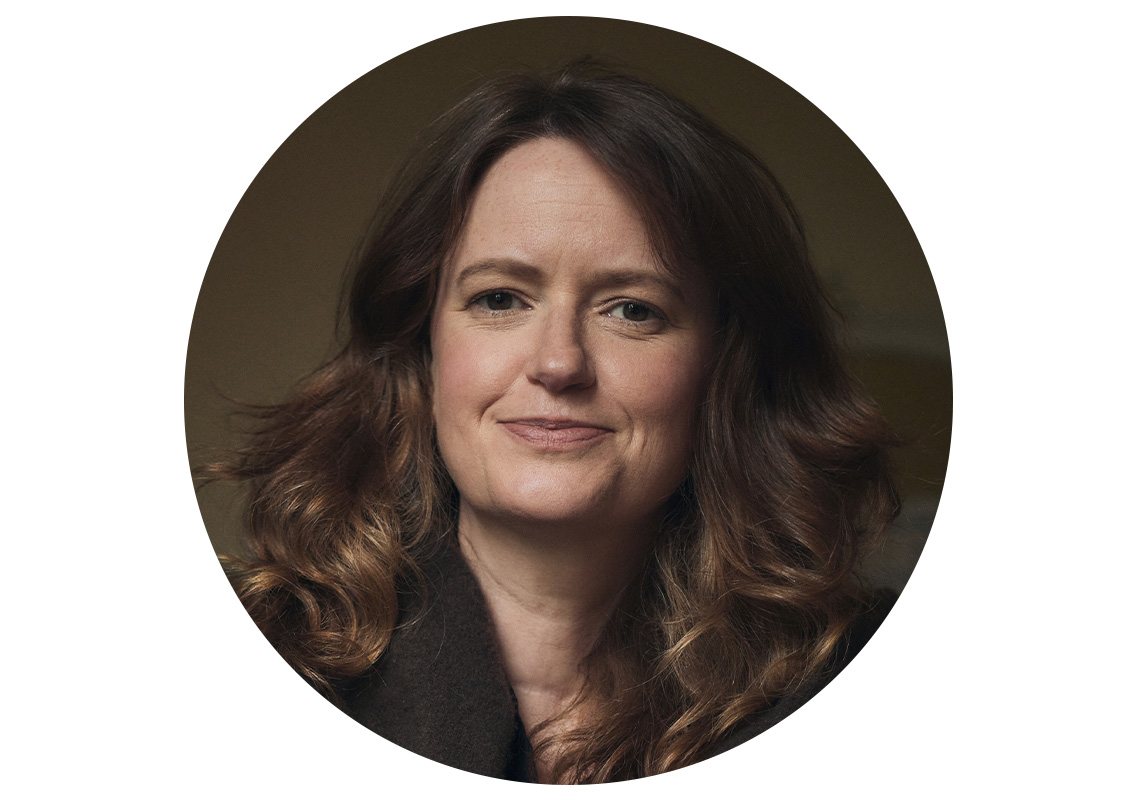
Natalie Whittle is a writer and editor based in Glasgow. Born and raised in South Wales, she read English Literature at University College London, and lived in Paris for three years working as a Time Out Paris journalist. She worked for 15 years at the Financial Times in London, where she held editing roles across the magazine and arts sections of FT Weekend. As the FT’s food and drink editor, she won an award from the Guild of Food Writers in 2015 and also collaborated with Penguin Random House to produce a compilation of the FT’s gastronomic interviews, Lunch with the FT: A Second Helping in 2019. Her first non-fiction book, The 15-Minute City, was published by Luath Press in 2021.