


The Evolution of ‘The Witch’ by Marion Gibson
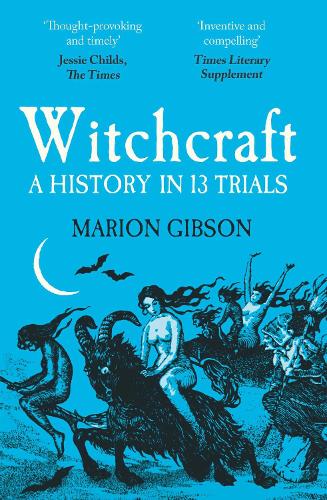
Using thirteen separate historical witch trials as a chronological thread, Gibson examines the world history of witchcraft, witch trials and witch-hunts. In a style that combines academic rigour with an unwavering humanity Gibson uncovers the subversions of popular perception and the deep misogynist roots of witchcraft.
Here, author Marion Gibson shows how the idea of the witch originated and came to be synonymous with religious suppression and patriarchal power.
The Evolution of 'The Witch'
by Marion Gibson
What is a witch? To answer that question, we have to start with another: What is magic, the force witches use? That answer depends on time and place. In early history, magic was considered to be a power innate in healers, shamans and religious leaders across multiple cultures. It allowed them to go beyond natural abilities, to change the world in inexplicable ways. Communities would have several such magical workers, combining medical and priestly roles. There was no clear line between their magical healing and harming, since good and bad magic were two aspects of the same force. On Monday a user of magic might bless you, on Thursday they might curse you – that was just how things were. If you felt a magically gifted person was using that force to do harm, you might vilify them as a ‘witch’ – a user of evil magic – and you might hold a local trial and mandate repentance. You might banish or kill the witch if their crimes were unacceptable. But witchcraft accusations would not spread widely, and, on the whole, you would not begin to believe all magic was evil. Some societies were concerned about this possibility – the ancient Greeks and Romans feared magic was inherently ungodly – but most retained a blurry notion that magic could be a force for good.
This changed in Europe during the medieval period, when a new theological science was established: the study of devils or demons, appropriately called ‘demonology’. The imaginative world of the fifteenth to eighteenth centuries was crammed with curses and blessings, angels, devils, ghosts, spirits that could invade bodies, fairies, elves and, ruling over it all, a benevolent God. Demonologists did not perceive the Christian God’s supernatural ability as part of that wider magical universe, however. Their deity’s powers, and the miracle-working of his priests, were not classed as magic. Instead they were thought of as springing from religious truth, a special class of power reserved for Christian clergymen. Therefore, all the other supernatural powers swirling about in the world must be lesser, and they came to be seen as evil witchcraft.
The either/or thinking that shaped demonology developed partly because the Christian Church was splitting internally. What began as a series of arguments over church doctrine soon escalated into violence, part of a culture war called, with bland understatement, the ‘Reformation’. The Reformation’s disagreements forced people to choose between Catholic (traditional) and Protestant (reformed) sects. As hatred between the two sides grew, it became permissible to kill fellow Christians, now branded as demonic opponents; something that Christians had been inflicting upon Jews and Muslims for many centuries but had now turned on each other. Catholics and Protestants came to regard each other as heretics, and the punishment for heresy was to be burnt alive. In such a violently divided culture, suspicion bred suspicion; leaders of both sects soon began to investigate whether Satan had other agents within their congregations. Before the fifteenth century, most churchmen regarded the healers and diviners in their communities as ineffective fantasists – mild sinners trafficking in charms and curses who couldn’t do much harm. But as Reformation either/or logic sunk in, the fear grew that these magical practitioners had an evil source of power: Satan. If the force they used wasn’t obviously Christian, it must be evil. That would make them witches, and it was a short step from burning heretics to burning witches; although not identical, both were enemies of God.
Who were the people accused of witchcraft? Most witches were thought to be female. Although healers and shamans could be of either sex, as magic became associated with evil, so it also moved towards association with women; Christian priests were all male. While many churchmen were good Christians, true to their gospel of love, others were obsessed with the regulation of women: their sexuality, conduct and thought. There were female saints in Catholic theology and Christ’s mother, Mary, was a venerated figure – such female role-models were deemed acceptable – but clergymen brooded over Eve, the first woman. Eve had lived peaceably with her husband Adam until she succumbed to Satan’s temptation to eat a fruit symbolising knowledge. She fell into sin, persuaded Adam to join her and condemned their descendants to damnation unless they led repentant lives. Churchmen educated on the Eve myth – often celibate as part of their religious commitment – therefore tended to distrust women as dangerous rebels, rather like heretics.

A witch could make her enemy’s wife sick, steal his cows’ milk, harm his goods, crops or health, or kill him, demonologists explained. Misogyny plays a crucial part here, underlying the accusers’ fear, hatred and discrimination. Most accused witches were poorer women, some with unusual beliefs about religion or an assertive manner that worried their neighbours. Some were comparatively wealthy, but still attracted their community’s dislike. Some were older women, widows living alone. But many were younger women: with or without children, some married, others not, some working, others begging. They were often women whom their communities perceived had been hurt, bullied, jilted, refused charity or a job. Their neighbours sometimes heard them spitting out sharp words. Then something happened to a person who had offended the suspected witch: their cow died, their child had visions, their ship sank. People began to think a witch had caused the harm. Perhaps in reality the accused had attempted magic. They were often individuals without much power in their societies, and the idea that a disempowered person could use magic did offer hope – which was in actuality limited by gender, economic status or differences of belief and opportunity. But sometimes there was no compelling evidence that suspects had done anything magical at all. Either way, when the accused people were arrested and dragged to the minister or magistrate, it would not be unusual for them to confess to witchcraft, or at least admit to a belief in magic. An accused witch would have her own folk beliefs about witches and magic, often differing from her interrogators’ fears. But under pressure, and in some cases torture, her story would likely come to align with her accusers’ to the extent that conviction was plausible.
In telling this seven-century story, Witchcraft: A History in Thirteen Trials shows how the demonological idea of the witch originated and grew, changed over time but did not die. Witches continue to be the products of people’s fears, the embodiment of the other, and the witch trial remains a useful mechanism for those in power. As some marginalised groups have gained more leverage over the last three centuries, the image of the witch continues to be a helpful tool for their suppression – and it is becoming more common to hear of witch trials, not less. An understanding of the history and habits of persecution is of vital importance today, once we see that witches are still on trial.
Foyles October Book of the Month
Foyles October Book of the Month
Witchcraft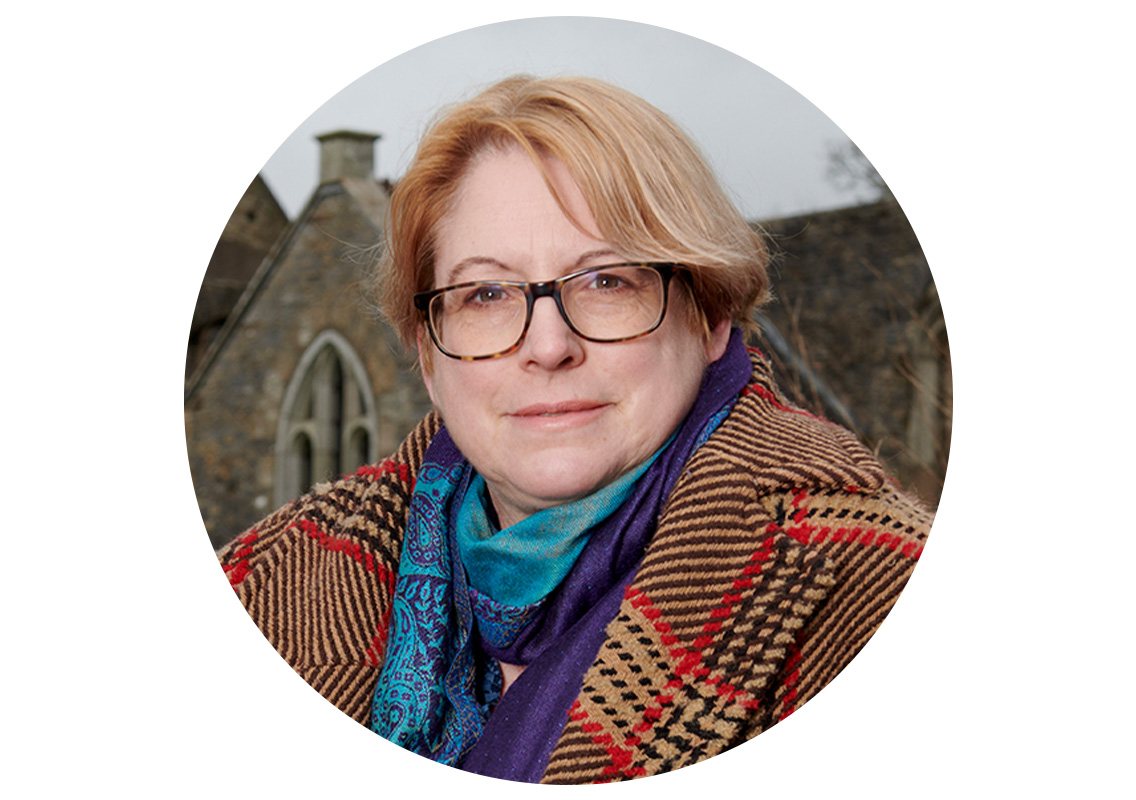
Marion Gibson is Professor of Renaissance and Magical Literatures at the University of Exeter, UK. She's been thinking about witches in history since she read her first account of a witch trial in a book lent to her on a dark, rainy afternoon in November 1991. She was so excited by the story that she forgot to give the book back. Thirty years on, she is the author of nine books on witches in history and literature. Her most recent book is The Witches of St Osyth for Cambridge University Press.