


Fumio Yamamoto and Skinship by Brian Bergstrom
A classic Japanese bestseller, published in English twenty-five years after it took Japan by storm, the lives of five ordinary women are depicted with irresistible humour and searing emotional insight. Here; translator Brian Bergstrom reflects on Fumio Yamamoto's writing, and the central role of 'skinship'—a Japanese term meaning “the aspect of a relationship that arises from physical touch”.
'Off-beat, witty, wise and thought-provoking, these darkly comic stories portray five unique women as they deal with the societal pressures that come with being a woman in their world'
- Cecilia Ahern
'Here are people caught between loss and regeneration. The struggles of their forlorn hearts are depicted with a light, graceful touch. There will come a point in all of our lives when we will need Fumio Yamamoto's writing'
- Saou Ichikawa
Fumio Yamamoto and Skinship
by Brian Bergstrom
In Japanese, there is a class of words called waseigo, or “language made in Japan,” words adapted from other languages but put to new uses within Japanese. They are part of a larger category, gairaigo: “foreign-derived language”—or, more literally and poetically, “language come from afar.” Waseigo bear the most visible traces of this journey from afar, showing both their roots and their transformations on their surface.
My favorite waseigo/gairaigo is “skinship.” Skinship refers to the aspect of a relationship that arises from physical touch—the “ship” is from “friendship,” indicating the various roles skin can play, the ways it enriches and defines the relations that make up life itself. It apparently derives from an idiosyncratic academic use of the term in English, but while the word never caught on in its native linguistic home, it became very commonly used in Japanese and later Korean, enough so that it is only now re-entering English via those languages (see, for example, Yoon Choi’s wonderful 2021 short story collection Skinship).
''Skinship refers to the aspect of a relationship that arises from physical touch—the “ship” is from “friendship,” indicating the various roles skin can play, the ways it enriches and defines the relations that make up life itself.''
In the short story “Naked,” included in Fumio Yamamoto’s collection The Dilemmas of Working Women (Virago, 2025), the protagonist uses the term in a scene of post-coital intimacy with a man she somewhat mockingly refers to in her head as “Little Ken.” She lies there, his sleeping head on her shoulder, and thinks:
“All it took was a bit of contact between my naked body and his to get me liking some guy I’d never given a second thought to before, it seemed – never underestimate the power of sheer skin-on-skin. I struck myself as a bit funny at that moment, as well as a bit stupid.” (The Dilemmas of Working Women, 21)
What I translate as “sheer skin-on-skin” is, of course, the made-in-Japan “English” word skinship. In this instance, the meaning is sexual, but the term can refer to non-sexual instances of touch as well, such as between a parent and child or between friends. Here it refers to something within sex that isn’t reduceable to the sexual—the animal being within us that needs to feel the animal being of others, that communicates feeling that cannot be expressed in words, but rather only gestured at. Never underestimate the power of this, Yamamoto says here, spelling it out explicitly in a throwaway line.
Fumio Yamamoto came into literary fiction via genre fiction, specifically romance; fed up with working as a self-described “typical OL” —that is, an “office lady,” another example of waseigo—in the late 1980s, Yamamoto decided to branch out, and looked for literary prizes that she might enter to become a novelist. She ran across one for Cobalt, an imprint specializing in romances specifically targeting young women, and she submitted a piece—and won. She describes the ensuing experience of writing extremely formulaic novels (she reports that many times she didn’t even choose these novels’ titles) as being essentially like a boot camp teaching her how to write. Later, chafing at the genre’s restrictions and the diminishing monetary rewards within the sector during the recessionary early 1990s, Yamamoto decided to teach herself how to write literary fiction. She reports that she did this frequently by literally transcribing stories by writers she admired by hand, comparing this to how monks copy sutras as part of their practice.
In other words, both the stories she tells and the forms they take are intimately related to the body as the conduit through which to feel and know. The post-romance phase of her career tends to take typical romance set-ups and tip them on their head, sometimes resulting in wry comedies of upturned expectation, other times telling stories with darker, even Gothic tones. She becomes more and more successful on this path throughout the 1990s, eventually winning the Yoshikawa Eiji New Writers Prize in 1999 for the novel Loveaholic, and then going on to win the even more prestigious Naoki Prize in 2001 for The Dilemmas of Working Women.
''The post-romance phase of her career tends to take typical romance set-ups and tip them on their head, sometimes resulting in wry comedies of upturned expectation. . .''
If the programmatic strictures defining the Cobalt romances treat ideals and fantasies as realizable, Yamamoto’s post-Cobalt books explore the difficulties and ambiguities of living as a woman negotiating a world that sells such fantasies as realistic goals. Yamamoto’s heroines perceive themselves (and are frequently perceived by others) as perverse, over-sensitive, and difficult. They are funny yet frequently melancholic, perceptive yet frequently self-deluding. The romances that form the narrative backbones of these stories are almost always dysfunctional, laced with power imbalances, anxieties, and toxic boundary-crossings. Yamamoto’s bodily contact with both literary and romance fiction leads her to play with the limits of both genres, expanding romance to question the assumptions underpinning it—there’s a way in which her work frequently reads as form of anti-romance—while also importing into literary fiction a palpable concern for treating the emotional lives of women seriously without turning them into either admirable heroines or irredeemable anti-heroines. Even the most unsympathetic or downtrodden of her characters have moments of grace, of connection. And these moments more often than not consist of skin-to-skin contact—that is, skinship.
In Dilemmas, the story “Naked” features not only the passage quoted above that uses the actual term, but also ends on a note of bodily connection as her friend’s daughter cuddles with her when she stays over at her house, leading to a cathartic emotional outburst: “I held my friend’s child tight against me and began to cry. My initial tears begat more and more, until my weeping turned into wrenching sobs.” The second story, “Planarian,” features a moment when the protagonist collapses in a department store and then is helped back up by a woman who becomes an important friend in the latter half of the story, while in the last story, the intimate act of haircutting plays a vital role in the male protagonist’s evolving relationships with the two most important women in his life. These moments of skinship are powerful not only in these stories but throughout Dilemmas; further, they are multivalent and affective, exposing the raw vulnerability underlying the characters’ situations. Yamamoto renders the power of skinship as the power of attachment itself, in its beauty and terror. What is unlocked by the opening of one body to another—as well as of one genre to another—is stuff of life itself, its melancholy, its humor, its tragedy, its hopefulness. If there’s any way out of titular The Dilemmas of Working Women, it can be found there, in the space of intimate connection between people, of skinship, and in the truths there revealed.
Brian Bergstrom
Montréal
June 19, 2025
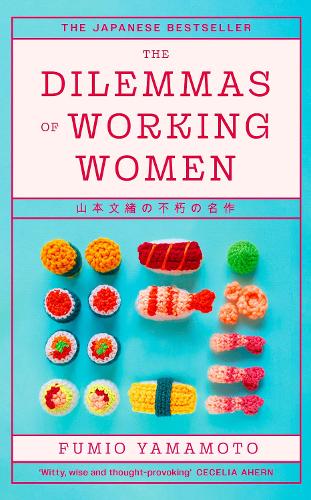
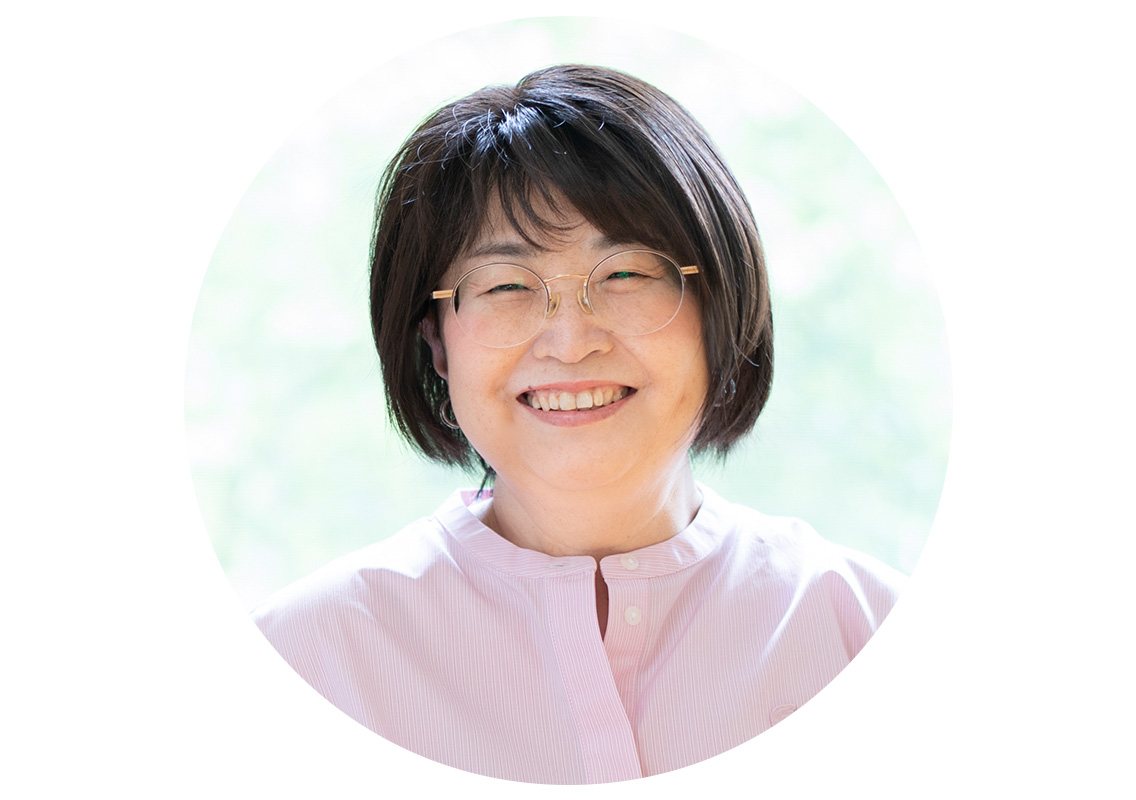
Fumio Yamamoto burst onto the Japanese literary scene in 1999 when she won the Yoshikawa Eiji New Writer's Prize for her book Loveaholic. Her follow-up in 2000, The Dilemmas of Working Women, won the prestigious Naoki Prize in Literature, before becoming a bestselling phenomenon. Her final novel, Rotations and Revolutions, was awarded both the Shimasei Literature Prize and the Chuo Koron Prize in 2021, and her journals, offering an intimate portrait of dealing with depression and then with pancreatic cancer, also became hugely popular. Yamamoto passed away in 2021 in Karuizawa, Nagano.
Photo Credit: Bungeishunju Ltd

Brian Bergstrom is a lecturer and translator who has lived in Chicago, Kyoto, and Yokohama, and is currently based in Montreal. His most recent translations include Sunrise: Radiant Stories by award-winning author Erika Kobayashi and Slow Down by Marxist philosopher Kohei Saito.