


Rachel Kushner on 'Creation Lake'
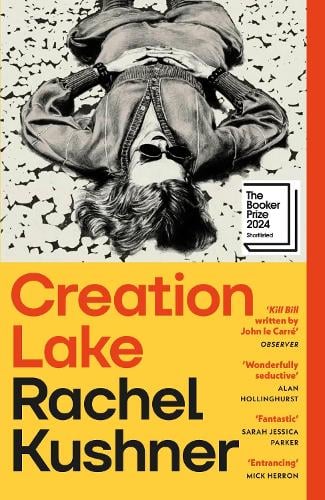
Our Fiction Book of the Month for July, Creation Lake is a propulsive page-turner of glittering insights and dark humour. Here—in an article previously published in the Guardian—the author shares insights into the inspirations for the book and the process of forging it.
'One of the best books of the year... ambitious, intelligent and gripping...'
- Spectator
'Think Kill Bill written by John le Carré: smart, funny and compulsively readable'
- Observer
On Creation Lake
by Rachel Kushner
Writing Creation Lake was a uniquely blissful experience. The novel synthesised into one object many things I think about and feel connected to, in terms of who we are and how we’re meant to live, and how to maintain an exalted idea of human life despite doubt and chaos. My narrator infuses the novel with an ambience of betrayal, an aspect that has stayed mysterious to me, but the mechanism that makes art work might operate best with critical parts unshown, even to their maker.
An early inspiration could have been that farmer in the Vallée de l’Homme, his first language Occitan, who held up a large crudely cleaved hunk of rock he’d found while ploughing and told me it was a 500,000-year-old tool. He’d placed this misshapen rock in my hand and I’d wondered what it could be used for, beyond head-smashing. Another enticing spark: my son reporting to me of a deep cavern he’d visited in the Lot départment, way underground, tall as a cathedral and flocked entirely in white magnesium crystals.
"He’d placed this misshapen rock in my hand and I’d wondered what it could be used for, beyond head-smashing."
For a decade I’d wanted to write this novel. I worked on it for several years, attempting to design a voice and structure, until suddenly I wrote it in 14 months. The first two lines of the book were the first two I composed: “Neanderthals were prone to depression, he said. He said they were prone to addiction, too, and especially smoking.” They are declarations by my character Bruno Lacombe, an elder addressing a group of young militants who have formed a commune in a remote corner of south-western France. Bruno, a veteran of the long 20th century, has abandoned not just militancy but life as we know it. He lives in a cave, convinced he has located a world where all chronologies merge on to a single plane of existence.
Bruno’s ideas are being transposed for the reader by my novel’s first-person narrator, alias “Sadie”, an undercover operative and agent of destruction who intends to instigate a police raid of the commune. More about her in a moment, but back to those first two lines: while I didn’t plant an image of Neanderthals smoking cigarettes merely as a clue, my reader can assume that Neanderthals did not smoke cigarettes, and that the novel is a parallel world featuring hallucinatory glints. I heard Bruno’s voice as priestly, tender, a little lunatic. I heard Sadie’s as amoral and blunt. (Perhaps rereading Nabokov’s Pale Fire encouraged a permissive instability: Sadie and Bruno, my Kinbote and Shade.)
". . . my reader can assume that Neanderthals did not smoke cigarettes, and that the novel is a parallel world featuring hallucinatory glints."
Sadie is a heavy drinker who prides herself on perfection, and leaves messes in her wake. Bruno, meanwhile, is a melancholic dreamer who revises, counter-historicises, makes myths – concerning peasant uprisings and repressions, the past and future of farming, of rural life. All myth functions as intentionally fictive: we know that myths aren’t real, but their fictionality serves to resolve some real social and historical dilemma or contradiction or failure. Whether Bruno can heal himself is only one question. Whether he can fix Sadie, merely another. His concerns, and my own, go beyond the confines of individuals, to some tear in our existence that we don’t know how to suture, and have instead opted to repress. To have, in Bruno, a character willing to face this tear, but lovingly, was a form of profound personal repair.
The novel takes place over six weeks’ time, but the real trajectory is not chronological. It is earth-to-sky. Through Bruno, I felt I was tunnelling down into the sedimented secrets of human existence, digging a hole to the centre of the Earth. When I got there, I was able to see the cosmos as if from a chambered but roofless place, an unreachable wonder framed in a human context, like a “Skyspace” by the artist James Turrell. The feeling was transcendent. I’m still living off its psychedelic updraft.
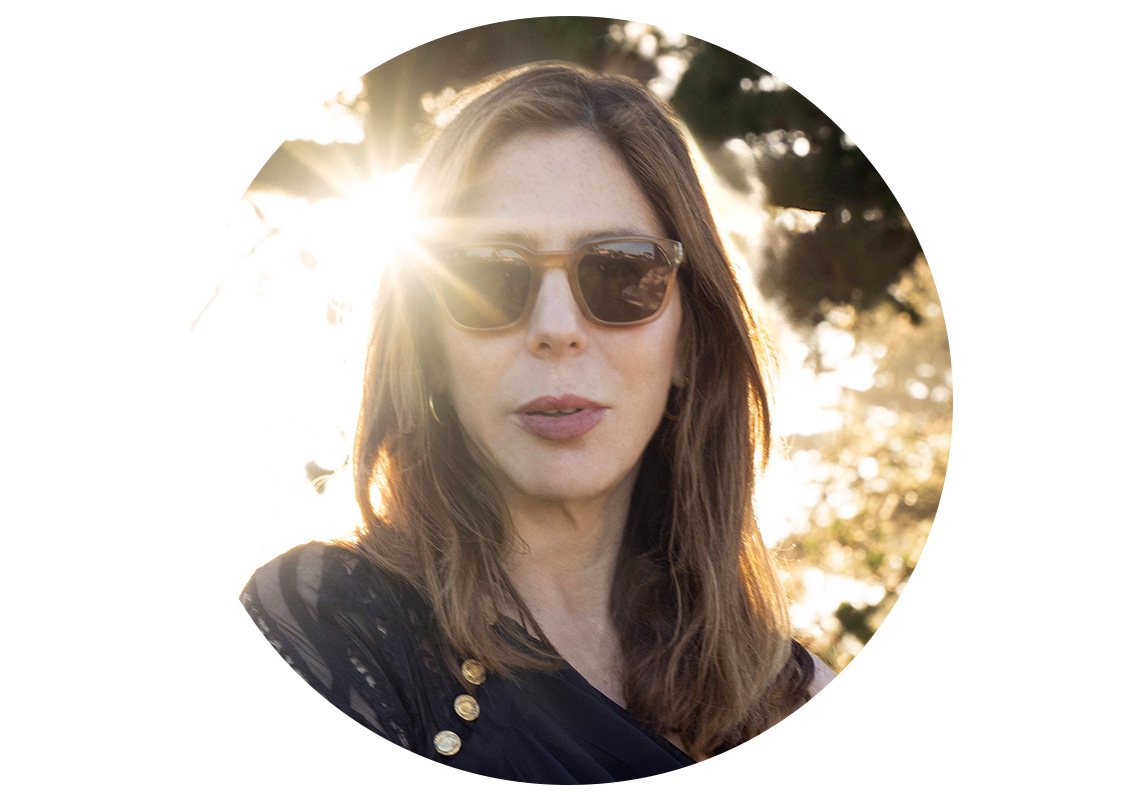
Rachel Kushner is the author of The Hard Crowd, her acclaimed essay collection, and the internationally bestselling novels The Mars Room, The Flamethrowers, and Telex from Cuba, as well as a book of short stories, The Strange Case of Rachel K. She has won the Prix Medicis and been shortlisted for the Booker Prize, the National Book Critics Circle Award, the Folio Prize, and was twice a finalist for the National Book Award in Fiction. She is a Guggenheim Foundation Fellow and the recipient of the Harold D. Vursell Memorial Award from the American Academy of Arts and Letters. Her books are translated into twenty-seven languages.