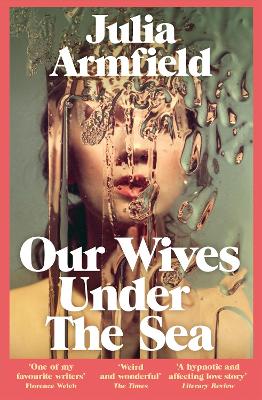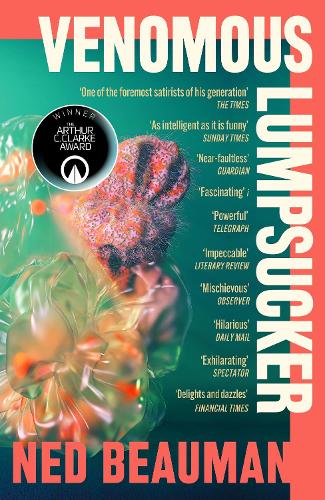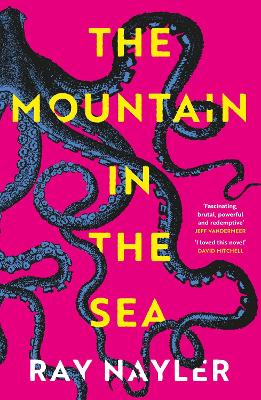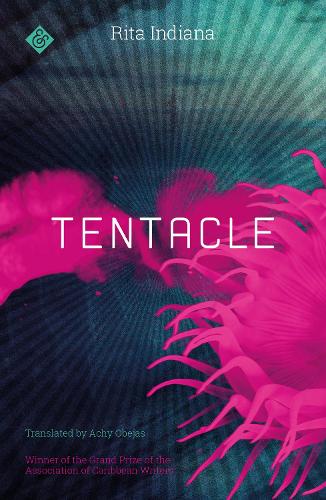


Gina Chung on change, loss, and the power of the sea
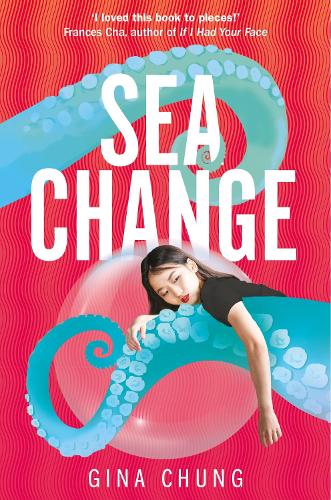
Funny, smart, moving and weird—Gina Chung's debut novel Sea Change is just in and already making waves (we couldn't resist that one).
Thirtysomething Ro is stuck. Her dad is gone, she's estranged from her mother, her boyfriend picked a mission to Mars over her, and she's still working in an aquarium. Her only friend is an octopus called Dolores—and when Dolores gets bought up by a private investor, Ro's world is in danger of crashing around her.
It's a brilliantly original novel that combines great characters and razor-sharp writing with an exploration of trauma, change and finding yourself.
Read on for more from Gina Chung, on the writing of her debut novel and the themes in play, and the meaning of the sea.
On Change, Loss, and the Power of the Sea
As a child, I was captivated by the sea. Some of my earliest memories are of standing in the surf at the beach in New Jersey with my father, watching the water swirl around our ankles and feeling the sand shift beneath our feet. The North Atlantic Ocean is not known for being particularly hospitable, at least where I grew up—its waters are choppy, a forbidding gray-green, and quite cold all year round—but that didn’t stop me from splashing around in the waves and imagining myself to be a mermaid or a dolphin whenever I went to the beach. I loved how weightless and buoyant I felt in the water. This was a much-needed release for me as a young Asian American girl moving through a world where, as I grew older, it felt like my body was always being measured and evaluated and found wanting in some crucial way, both in the Korean immigrant community I grew up in and the larger, generally white world around me. But in the water, particularly in the ocean, I just felt alive and free.
I decided to title my novel Sea Change because, while most of it is set in an aquarium, I wanted to evoke the wildness of the open ocean, to call up the idea of shifting tides and forms. The sea, with all of its power, malleability, and force, felt like an apt vehicle for trying to explore whether my protagonist, a young aquarium worker named Ro dealing with a breakup, unresolved childhood traumas, and a series of losses (including the loss of her father, who disappeared at sea years ago), could learn how to change her mindset and want to keep on living. Much later, I learned that the phrase “sea change” actually originated from Shakespeare’s The Tempest, a play that deals not only with magical beings and shipwreck, but also wonder, bereavement, and forgiveness—themes that I was also attempting to explore, without quite realizing it, when I was writing this book.
Sea Change centers around a special giant Pacific octopus named Dolores, who Ro cares for at the aquarium. In recent months, many people have asked me why I chose to write a novel centering around an octopus. Usually they want to know if I’ve ever had an encounter with an octopus, or if I’ve worked in an aquarium. I wish I could say yes to these questions, but the real answer is that it all started with an in-class writing assignment during my MFA program, in which we were asked to imagine something turning blue. The first thing that popped into my head was an octopus, and I simply ran with it. I have always admired octopuses for their prodigious intelligence and otherworldly beauty, and as I learned more about them while writing my novel, I also came to admire them for their adaptability and complexity. I learned, for example, that octopuses can squeeze themselves into almost any space or container, as long as their beak (the only hard part of their bodies) can fit, and that they also have nine brains (one central brain and one for each of their arms). My research came to inform not only my understanding of the octopus herself, but also the person observing her, my protagonist. Ro’s musings about love, loss, and memory became inextricably intertwined with her observations of Dolores’s behaviors. Over the course of the novel, Ro begins to understand that she too can learn to adapt and reorient herself to the changes in her life.
Dolores also happens to be Ro’s last remaining connection to her marine biologist father, who discovered her in the waters of the Bering Vortex before disappearing there. In the Bering Vortex, an extremely polluted and toxic zone off the coast of Alaska that I created for the novel, the twin forces of climate change and pollution have combined to create a kind of no-man’s-land where anomalies abound. More than 20 feet long, Dolores is larger than your average giant Pacific octopus, and she’s also much older, as she is somewhere between 18 and 25 years old (most giant Pacific octopuses live for only about three to five years). Before his disappearance, Ro’s father had been doing research on Dolores and other animals in the area, determined to learn what had caused their genetic anomalies and enabled them to survive for so long under such adverse conditions. While I’m not a climate scientist myself, I believe that the ocean and its many creatures hold so many important insights for how we can take better care of our planet and our natural resources. The ocean is a mirror, in many ways, to our life on the earth’s surface. It is, of course, where life originated, and its waters bear the imprint of our all-too-human greed, fears, desires, and folly, especially as sea levels continue to rise.
For me, the sea is both a beacon and a warning, a reminder that if we cannot learn to live in harmony with our planet, rather than working against it or attempting to conquer it, we will be lost. It is also the site of my earliest inspirations, a place of continual change, discovery, and renewal, and a refuge where I can come home to myself.
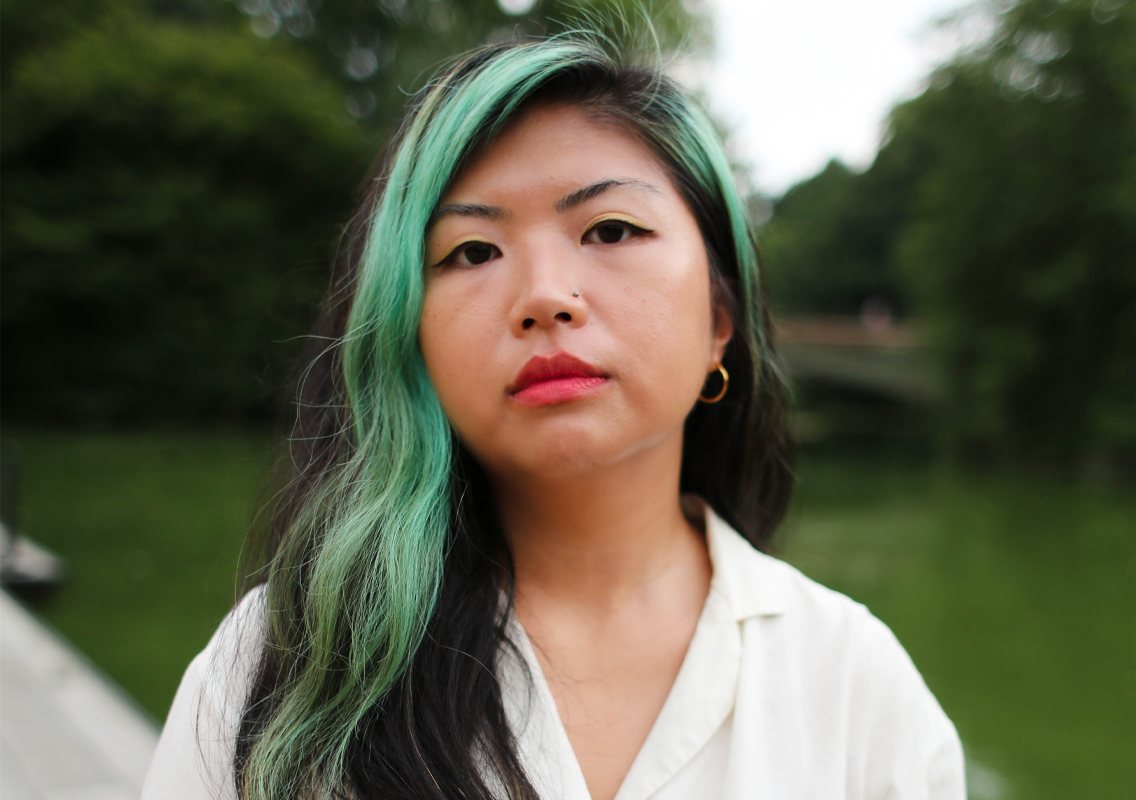
Gina Chung is a Korean American writer from New Jersey currently living in New York City. A recipient of the Pushcart Prize, she is a 2021-2022 Center for Fiction/Susan Kamil Emerging Writer Fellow and holds an MFA in fiction from the New School. Her work appears or is forthcoming in Kenyon Review, Catapult, Electric Literature, Gulf Coast, Indiana Review, and Idaho Review, among others. She is also the author of the forthcoming story collection Green Frog. Sea Change is her first novel.
Weird things under the sea
See More