


Some Men in London: on writing queer history and the importance of remembering
In two revealing and erudite volumes, Some Men in London uses extensive research in the form of historical documents, diaries and letters to uncover the rich reality of life for queer men in London and serves as a powerful testament to queer life in post-war London.
Here editor Peter Parker reflects on writing queer history and the importance of remembering.
Some Men in London: on writing queer history and the importance of remembering
by Peter Parker
When I began assembling items for my two-volume anthology, Some Men in London, I wasn’t entirely sure what would emerge. Some years later, I felt very pleased with the huge pile that had accumulated of newspaper and magazine clippings, police and military records, government reports, parliamentary debates, files relating to cinema and theatre censorship, private letters and diaries, plays, films, poems and novels. Deciding how to use them to create a coherent and readable book, however, was another matter. I was reminded of the time when, recovering from jaundice, I attempted to do a large and fiendishly complicated jigsaw puzzle that had no straight edges and no image on the box to suggest what picture would finally emerge. My previous books had been biographies and histories, two genres that, by and large, suggested their own shape and narrative; but unless I was to produce a mere ragbag of miscellaneous material relating to the lives of queer men in the capital, I needed to find a coherent structure in which to arrange this mass of material.
It had been agreed that the book would be arranged chronologically, from the end of the Second World War until the passing of the Sexual Offences Act in 1967. This at least provided me with a narrative trajectory, charting the very gradual change in public and official attitudes to homosexuality as moves were made to change the law that criminalised it. But this played out against those more personal accounts of homosexual experience, and the books, plays and films that reflected this experience, and these had somehow to be slotted into the overall picture. In addition, the story of law reform could not be presented as a straightforward chronicle of steady progress: for every small step forwards, there would be several paces back as campaigners found themselves pitted against those who continued to see homosexuality as an existential threat, something that undermined the values of British society and could, like some virulent infection, sweep through the country unless checked by the legal system.

Way back in 1898, Oscar Wilde had looked forward to a time when homosexual acts would cease to be illegal. ‘I have no doubt we shall win,’ he told the campaigner George Ives, ‘but the road is long, and red with monstrous martyrdoms. Nothing but the repeal of the Criminal Law Amendment Act would do any good.’ This was the 1885 act that outlawed all homosexual acts rather than, as had previously been the case, only sodomy. What became Section 11 of the Act, introducing the new crime of ‘gross indecency’ between males, was proposed at the very last minute by Henry Labouchere, the Liberal Member of Parliament for Northampton, and approved in the House of Commons late at night during a debate attended by very few MPs. Wilde was himself prosecuted under this section and sentenced to two years hard labour, a punishment that was still handed down for homosexual offences until 1948 when hard labour was finally abolished. Even after that, the maximum tariff of two years’ imprisonment remained in place for most homosexual offences, however trivial.
Wilde had suggested that ‘it is not so much public opinion as public officials that need educating’, and as I sifted through newspaper articles, police and army documents and parliamentary records, I could only agree. MPs arguing against a change to the law often suggested that the public wouldn’t stand for it, and while public opinion is always hard to gauge, it was in some cases ahead of parliament, or largely indifferent, regarding homosexuality perhaps with distaste but also with a feeling that men could do as they pleased among their own kind. Public officials were a different matter, and I came across many startling examples of sheer ignorance among the politicians themselves, metropolitan magistrates, the police, and even well-known and often-quoted psychiatrists.
It was important to include all shades of opinion in the book, but also to balance the ‘monstrous martyrdoms’ of the many men who were prosecuted, sent to prison, hounded out of their jobs, blackmailed, beaten up, murdered or driven to suicide, with an evocation of the cheerful defiance and robust sense of humour that characterised much of queer life in London. Several readers of the first volume told me they had no idea that men had so much sex – and indeed fun - in the notoriously repressive period of the 1940s and 1950s, but there existed a thriving subculture, with its own language, codes and places of assignation. In addition, queer men made a huge contribution to the cultural life not only of the capital but of the entire nation, and I was able to draw upon novels, plays, poetry, autobiographies, films, fashion and painting that all demonstrated this.

Although conceived as one book, Some Men in London ended up being published in two volumes in order to accommodate the many different kinds of material and large number of witnesses I wanted to be represented. By sheer good luck, the manuscript neatly divided into two more or less equal portions, so that the first ended in the final year of the 1950s, leaving the second to cover the 1960s. One might imagine that genuine progress towards reform would become apparent in the supposedly Swinging Sixties, as Britain finally sloughed off the dismal and downtrodden post-war years of austerity and embraced the sexual revolution. But once again, the story is not that simple. While everyone else may have been enjoying new sexual freedoms, Parliament continued to deny these to gay men, who still endured police harassment and were sent to jail for behaviour that was in essence no different from that of heterosexuals. While some sections of the press argued strongly in favour or reform, tabloid newspapers continued to run alarmist and prurient articles about the ‘twilight world of the homosexual’ with headlines such as ‘How to Spot a Possible Homo’ and ‘Will My Son Be A Homosexual? The Question that Nags at the Minds of So Many Parents’.
I now see that what eventually emerged from the vast amount of disparate material I had accumulated was in effect a history of an era that is in more danger of being forgotten than I had realised when I embarked on this project. Most of the people who appear in the book are long since dead, as (thank goodness) are many of the attitudes expressed in it. These attitudes will no doubt shock those readers brought up in an era when homosexuality has entered the mainstream, and gay rights are enshrined in law. But people ought to be shocked: if we look to the dark past, we can learn from it and guard against its return. The rights that we all now take for granted did not appear by magic. They were fought for by people we should remember - and they can vanish overnight.
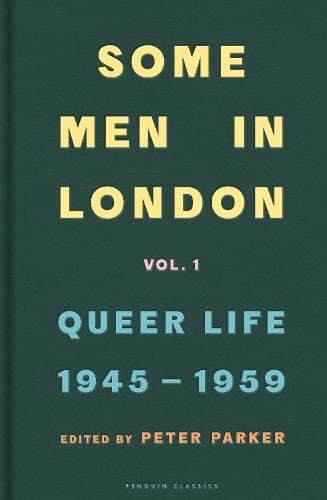 Some Men In London: Queer Life, 1945-1959Peter ParkerPrice: £30.00Quite simply, this book is a work of genius - Matthew Parris, The SpectatorAn essential study of post-war gay London lif... See moreQuite simply, this book is a work of genius - Matthew Parris, The SpectatorAn essential study of post-war gay London life... one of the best anthologies I have ever read - John Self, The Obs... See more
 Some Men In London: Queer Life, 1960-1967Peter ParkerPrice: £30.00'Quite simply, this book is a work of genius' Matthew Parris, SpectatorThe second in a major two-part anthology uncoveri... See more'Quite simply, this book is a work of genius' Matthew Parris, SpectatorThe second in a major two-part anthology uncovering the rich reality of life for queer men in London, from the end of t... See more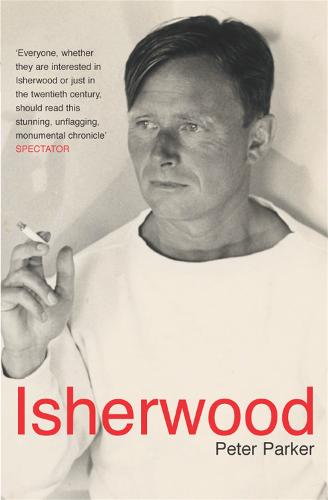
 A Little Book of Latin for GardenersPeter ParkerPrice: £14.99How did the delphinium get its name? Which parts of the body lend their names to auriculas and orchids? Who are the gent... See moreHow did the delphinium get its name? Which parts of the body lend their names to auriculas and orchids? Who are the gentian, lobelia and heuchera named after? Why are nasturtiums and antirrh... See more
 The Last VeteranPeter ParkerPrice: £9.99This moving and timely book explores the way the First World War has been thought about and commemorated, and how it has... See moreThis moving and timely book explores the way the First World War has been thought about and commemorated, and how it has affected its own, and later, generations. See more
 The Old LiePeter ParkerPrice: £23.99Talks about notions of what it is - or perhaps was - to be "English". Such notions are highly relevant as Britain's invo... See moreTalks about notions of what it is - or perhaps was - to be "English". Such notions are highly relevant as Britain's involvement in the so-called war against terrorism promotes questions abou... See more

Peter Parker is the author of biographies of J. R. Ackerley and Christopher Isherwood, The Old Lie, The Last Veteran, Housman Country and A Little Book of Latin for Gardeners. He edited A Reader's Guide to the Twentieth-Century Novel and Twentieth-Century Writers, is an advisory editor of the Oxford Dictionary of National Biography, and contributed essays to Britten's Century and Fifty Gay and Lesbian Books Everybody Must Read. He has written about people, books, art, architecture and gardening for a wide variety of newspapers and magazines, and lives in London's East End.