


Reviews: Development with Women (1)
“Development with women”
(Paperback)
Development with women (Development in Practice Readers)
Introduced by Dorienne Rowan-Campbell published by Oxfam GB,
274 Banbury Road, Oxford OX2 7DZ, UK, [email protected], 1999,
208 pages, ISBN 0-85598-419-8
Development with women is a thematic collection of papers selected from Development in Practice, an international journal concerned with the social dimensions of development and humanitarian work. This book encompasses articles from several writers, under the theme of women with development. It illustrates how NGO'S and organisation have been able to bring development for women. This book analyses the limitations of gender training, policies and women-focused programmes. By its analysis, it recommends mainstreaming of women development programmes into the other social programmes such as anti-poverty programmes, anti- suicidal programmes, etc. It also suggests the need for the incorporation of gender aspects into the policy making.
The articles in the book are easy to understand, with the usage of simple language. This length of each essay is also moderate which keeps the flow of the book. In total this book covers 13 articles with an exhaustive introduction from the compiler, Dorienne Campbell. The articles in this book came from writers of diverse backgrounds. These reports are based on experiences in different countries, for example, Puja Roy wrote about women in Bihar, India while Khan wrote about women entrepreneurs in Bangladesh. In today’s world, economic development is becoming the foremost priority of nations. Every country wants financial stability more than ever. In this era of economic wars, men have realised that for a more exhaustive development, it is necessary to integrate women into the developmental programmes to eradicate poverty and low social, economic status.
The book begins with an article about the importance of women in development. This introduction briefly analyses the reasons behind the current patriarchal society, inequality in work sector, class system, and contemporary gender roles. According to Doctrine, such societal constructions have its roots in the industrial revolution of the Europe. These values and practices later penetrated into the rest of the world through colonisation. It regards feminism as the most important revolution due to its capacity of changing minds and hearts.
The second chapter analyses how to successfully integrate women development programmes into the anti-poverty programmes through participation and needs satisfaction. It discusses cases such as Grameen Bank in Bangladesh, SEWA( self-employed women’s association) in Gujarat India and women’s credit schemes in Uganda. Other articles of the book discuss the similar topics such women in the informal sector, strategies to eradicate gender policies in patriarchal societies, ending violence against women, female entrepreneurs, women trafficking, and policy making to empower women.
I believe that this book compiles some of the finest essays written on the women and development. It is brief, easy to understand, and interesting. It gives more concrete, practical and constructive criticism on the women-focused programmes. This book draws its recommendations, by the mentality of our society, economics, the behaviour of agencies, politics and previously gained experiences. As a book consisted of several papers, this book might not give one single centred idea, but it gives different ideas drawn from diverse experiences and mindsets, which makes it more prolific and practical.
Page of 1
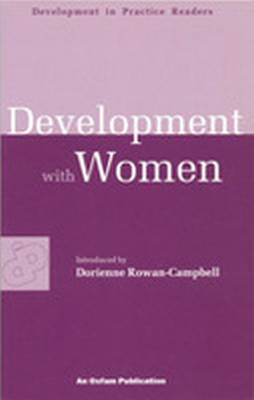
Development with Women: Selected Essays from Development in Practice
Deborah Eade (author)
Paperback Published on: 01/10/1999
Price: £19.95