


Reviews: he (1)
“A PROFOUND MASTERPIECE...FOR ANYONE WITH A GROWN-UP BEATING HEART”
(Paperback)
A LITTLE PROLOGUE TO SET THE SCENE
In order to avoid the pitfalls associated with, er (consults thesaurus), giddy hyperbole, I let several months pass before attempting a review, just to see if the initial feelings I experienced about the above had changed in any way. Not a bit of it, as it happens, so this is what I came up with…
………………………………………………………………………………………..
I swear I’ve never read anything like HE, JOHN CONNOLLY’s novel about STAN LAUREL and, of course, OLIVER HARDY. If you love their work, love them as the greatest comedy double-act of all time then, crucially, you have to love them as human beings with all the complexities and flaws that go with the world they inhabited. Anything less is to misunderstand what a massive achievement Connolly's work represents. The flow of his words, their deliberate rhythms and structures and the intense emotional impact they deliver, paint the most vivid picture of one man, Stan Laurel, facing his own inescapable mortality, reaching out for decades-old memories that are fast fading in direct proportion to his physical deterioration. It is both terribly sad and beautifully poignant. But also funny, heartwarming, annoying, frustrating and joyous…and all the other things that, basically, go to make up a life. An ordinary man on the one hand, yet someone bathed in that rarest glow of extraordinary genius on the other.
Sadly, the presence of CHARLIE CHAPLIN (equal in talent, but not to my taste - too much bathos), cast a long, and arguably needless, psychological shadow over Stan Laurel that lasted all his life, with no real closure; he just couldn't shake the incorrect belief that Chaplin's work was somehow cinematic 'Art', when compared to The Boys' 'simpler' fayre. They may have shared similar ambitions to 'conquer the world' as they travelled together across the Atlantic in 1910, along with the other Fred Karno hopefuls, but Chaplin was to be no friend - not with the monumental hang-ups he possessed. And this is a fascinating strand that HE comes back to again and again; its significance to Stan’s thought processes mingled with regrets about the slow-burn of his career trajectory in relation to Chaplin’s meteoric rise to fame.
Interestingly (and controversially, if some of the negative, missing-the-point reviews are anything to go by), Connolly uses just one particular swear word throughout, and that is solely to describe his subjects' engagement in a frequent and largely loveless act, you know the one I'm talking about. But his coarseness is entirely in context with the bigger picture: this was Hollywood of the 20s and 30s and Stan Laurel and Oliver Hardy were no different, at times, to any other then-famous stars of the silver screen, often displaying hugely contradictory moral standpoints, much to the delight of the voracious newspaper gossip columns. There's no doubt both men were brought up to be gentlemen but, in the grip of fame, theirs was very much gentlemanly behaviour of the 'old school' and subject to the interpretative whims of the moment. Whims leading to troubles that could not be routinely packed up and forgotten. It certainly says something about how the gender imbalance was viewed in those days, but the easy availability of alcohol also played its part in many a busted relationship. All willing participants therefore had a price to pay for their wayward behaviour, and some even paid with their lives. Throughout, however, the world continued to laugh at the perfectly-executed onscreen entertainment. Just as we do today.
HE traces the career paths of Laurel and Hardy, through the classic shorts, the forgettable major studio features of the 40s and Stan’s final years with Ida at his Oceana Hotel apartment in Santa Monica. In their prime, however, tangled domestic dramas ensured the feet of both men stayed not just on the ground, but often firmly in the mire. Stan, in particular, kept the Roach studio legal department very busy. The one thing that never suffered was the tremendous artistic creativity, which flowed as naturally as the blood and sweat that went into every frame of every classic picture he and his 'pal' made. I also urge you to look up the very last words he spoke before passing and marvel at the wonderful comic timing of it all - if ever there was a gag perfectly suited to a typically surreal fade-out of a never-filmed Laurel and Hardy two-reeler, that was it.
The last few chapters of HE are truly heart-breaking whether or not you’re familiar with what actually happened; Connolly's words hit hard but ultimately uplift and it’s impossible not to be moved by the raw emotion of unfolding events. The depth of the research involved and the interweaving of fact and fiction (the perfectly extrapolated dialogue) is seamless. I really can hear Stan joking and reminiscing with 'Babe', arguing with Hal Roach over contractual issues or trying to explain his latest wedded status to long-suffering agent Ben Shipman; some of the exchanges are just plain hilarious, even when shot through with a just-below-the-surface streak of melancholy. HE captures all that and so much more. Much more than I could possibly do justice to, but when something's this good I suppose it would be impolite not to at least have a go.
An astonishing novel in every regard, HE will stay with you.
UNRESERVEDLY RECOMMENDED
Page of 1
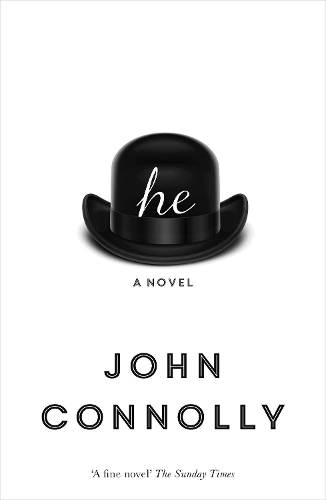
he: A Novel
Fiction & Poetry, Modern & Contemporary Fiction
John Connolly (author)
Paperback Published on: 28/06/2018
Price: £10.99