


Reviews: Imperial Mud (2)
“Down the Drain...”
(Hardback)
Down the drain...
When most people think of the Fenland of eastern England they tend to think in terms of isolation, backwardness, incest and damp. A once-barren swamp made useful through drainage.
However, as this work by Australian historian James Boyce shows, while the Fens were transformed by drainage this was not to truly improve them, rather to 'improve' them by systematically changing them, through legal enclosure backed by force, from a sustained and sustainable community of collective land management that had existed for nearly a thousand years – based on a deep understanding of the ecosystem – to a private-profit system benfiting large landowners.
Taking place between the late 16th to 19th centuries – as mercantile power supplanted blood and title as the prime mover of the economy – this process took the familiar form of depriving the indigenous people of those common lands and customs that enabled a healthy self-sufficiency, thus forcing them into the new processes of waged labour and a debt-based economy. As part of this policy, those disenfranchised people were then persecuted and criminalised for being disenfranchised – a process that was repeated across Britain and its colonies..
There,was, however, spirited and organised resistance – albeit doomed to failure when an increasingly centralised force was brought to bear, and a legal system was codified and manipulated by the very people who sought to steal the land – across the Fenlands. Also, it soon became apparent that the drainage process was, in fact, counter-productive, leading to a gradual erosion of fertility. Ultimately, though, this wasting of the Fens might lead to their reverting to a landscape managed in tune to it's own rhythms – for steady yield - rather than against them for short-term profit.
“Class and property”
(Paperback)
Living in North Yorkshire for about 20 years I had always heard strange stories about ‘The Fenmen’ from Lincolnshire and none of them were very kind, and usually very derogatory.
After reading this intriguing and revealing book from James Boyce the seed of this regional rivalry became very clear.
Imperial Mud explores the vast regions of southern and eastern England (Norfolk, Cambridgeshire, and Lincolnshire) that if not for massive human intervention would revert to swathes of fenlands with islands of solidity peppered throughout, back to how it was pre-Norman invasion.
There were a couple of real surprises reading this book, the first of which was huge in that the Fenlands could support quite a large population as they were extremely ‘productive’. I’m loathe to use that word as that was the idea behind the draining and enclosure of common land, but the common residents of the fens were unusually ‘rich’ in livestock and other foodstuffs.
The other was the politicising of the enclosure and how long it took, and how the othering of the Fenmen was used to garner sympathies from outside the area, and this othering was so strong it’s still common in 21st century North Yorkshire.
A brilliantly written and explained piece of research, so many insights into how common land worked in fen areas and how politicians were still extremely self-serving throughout history.
I received a copy of this on NetGalley in exchange for a review.
Page of 1
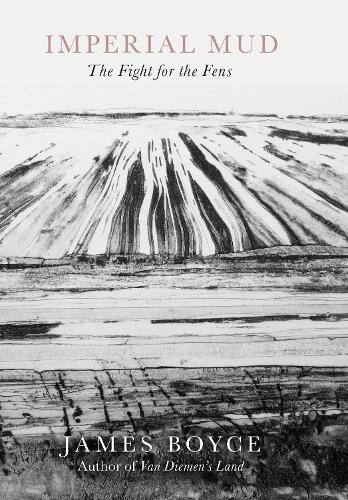
Imperial Mud: The Fight for the Fens
Non-Fiction, Education, Natural World & Environment, Geography, Science & Maths
James Boyce (author)
Hardback Published on: 02/07/2020
Price: £12.99