


Reviews: Middlemarch (6)
“A wonderful portrayal of the important little things”
(Paperback)
It’s so hard to review this book, I don’t know what I expected from Middlemarch, but I got more than I ever could have wished!
GREATNESS
The aspiration to greatness - personal, spiritual or professional - is seen in many guises. Dorothea strives for a great, good work, Lydgate seeks professional greatness in his medical theories, Rosamond wants great social status, Brooke seeks political success, Fred strives for gentlemanly and landed greatness, Bulstrode aims for religious rigour - yet they all somehow fall short. That’s not to say they are all failures - sometimes the results are more beneficial and I think this is part of Eliot’s observation. Maybe we misunderstand “greatness”? Perhaps it’s in the humbler and smaller things, and how do we really define it anyway? For me the only characters not striving for this are the Garths - they have humbler ambitions and more awareness of their lot, but perhaps they’re more realistic and contented for having these views.
CLASS & MARRIAGE
As with many novels of this time, class is a major consideration. Some have aspirations above their status and others are frowned upon for settling below their class. Societal perception and standing are examined within the lens of marriage, property and employment.
There are also different perspectives on marriage. There is often an expectation that wives will be subservient to their husbands. Lydgate expects this of Rosamond. Dorothea wants to serve and learn from Casaubon. Mrs Garth strives to submit to her husband even when she holds different views. It’s interesting however, that it’s often the women who hold an emotional power - Caleb seeks Mrs Gath’s advice, Fred is guided by his love for Mary, Rosamond’s stubbornness domineers Lydgate, Mrs Bulstrode emerges as an example of devotion to her husband.
Dorothea is a more complicated case. Having striven for a great work throughout her first marriage and after, it seems strange that in her 2nd marriage “so substantive and rare a creature should have been absorbed into the life of another, and be only known in a certain circle as a wife and a mother”. Despite often being discouraged from her plans by the men around her (Sir James, Mr Brooke etc) it’s they who lament the change in her. This is probably open to much more discussion!
GOODNESS & INTEGRITY/ SELFISHNESS & INDEPENDENCE
“Goodness” and integrity are exemplified by Dorothea, Caleb Garth and Camden Farebrother. They consistently put their own cares aside to act for the good of others. They stick to their own guiding principles and are not swayed by external considerations. Their behaviour is variously rewarded and despite acting for the best, they do not all achieve their heart’s desire.
Selfishness is seen in Casaubon through his marriage to Dorothea. Rosamond is perhaps the most irredeemably selfish. She doesn’t even have the self-awareness to realise her motivations. Bulstrode’s selfish and dishonest past comes back to haunt him. Fred’s pursuit of Mary is self-centred. He knows she has other prospects but can’t consider giving her up.
The centre ground is the striving for independence. Lydgate seeks professional independence. Will seeks personal independence. Money is a binding consideration for them both and also the inclinations of their wives. Lydgate fails to gain the autonomy he seeks but Will succeeds.
These characteristics are all interwoven and often depend on external factors, such as money, acquaintances, family, social status - it raises the question of how easy it is to behave in an exemplary fashion given different challenges.
CHANGE
Social and political change appears as a backdrop to the Middlemarch story and community. However there is change within it as well - the births, deaths and marriages of the various families. In the context of this novel it’s perhaps these smaller changes which have the greater imp[act.
FINALLY
So there’s so much more that could be said about this masterpiece and so much I will have missed.
This book is a delight and it makes you appreciate the humbler things in life - so I leave you with the final words:
“..for the growing good of the world is partly dependent on unhistoric acts; and that things are not so ill with you and me as they might have been, is half owing to the number who lived faithfully a hidden life, and rest in unvisited tombs”
“Middlemarch”
(Hardback)
“Absolutley brilliant - engrossing and witty!”
(Hardback)
Absolutely brilliant! I had been put off reading this for so long because it is a beast in size! But then I realised that would make it the perfect pandemic audiobook treat and I listened to the fabulous Juliet Stevenson version (she does all the different character voices brilliantly!). Eliot spins a wonderful yarn, delving into the various lives and minds of the residents of Middlemarch with expert skill and a wry narrator on standby with witty commentary. Her skill at handling all the different characters and managing to keep the reader equally interested in them all is something modern writers could learn from! All in all an excellent read - don't be out off - give this classic a go!
“Timeless classic”
(Hardback)
I usually tend to avoid long Victorian novels, as I sometimes find them incredibly dull. The overly long sentences, the unnecessary descriptions of absolutely everything and everyone makes for tedious reading.
But somehow George Eliot has managed to write a novel that was a pleasure to read. This is a timeless story about people, real life and relationships. I loved her descriptions and the characters were all so different and fantastically flawed and relatable. The slowly advancing plot was surprisingly interesting and I like how the narration isn't confusing, like it it in some older novels - this was my biggest peeve with Wuthering Heights and the reason I am not a fan of Bronte's writing.
The only negative thing I can say about this is that I tended to forget a few things that happened previously, mostly due to the length - then again that could be seen as a positive thing, Eliot bringing back something you didn't think was significant enough to remember. Either way, she was a genius and I cannot wait to devour more of her writing.
“Middlemarch”
(Paperback)
There are purists out there who will hate me for saying this, but Middlemarch is a very good soap opera. Like Coronation Street or EastEnders, it is set in a specific locality – in this case a country town. It has central characters around whom the story revolves. These are the Brooke sisters, Dorothea and Celia, and their respective husbands, Mr Casaubon and Sir James Chettam. There is also Dr Lydgate who has been appointed to run the new hospital by the banker, Mr. Bulstrode and his wife, Harriet, is the sister of Walter Vincy, who has two children, Fred and Rosamund, who are central to the plot. And, so it goes on as character after character is linked in some way to the rest. It is quite clearly a soap opera.
The issue, as in many a nineteenth century novel, is how to make a good marriage, which meant finding a partner of the right age and appropriate status. It also meant avoiding any connection that might bring the family into disrepute, let alone opprobrium or scandal. That is what lies at the heart of the novel. But the political setting is also important. It is the end of the 1820s and beginning of the 1830s. The old order, the power of the landed aristocracy, is being challenged by the emerging power of the industrialists. The Duke of Wellington, the Prime Minister, has just conceded Catholic Emancipation, and pressure is building for the reform of Parliament. Mr Casaubon’s penniless cousin, Will Ladislaw found himself advising Mr. Brooke, Dorothea Casaubon’s uncle, on how to bring about parliamentary reform. Dorothea’s brother-in-law, Sir James Chettam, a hereditary baronet, is opposed to reform. Dr Lydgate, who has new ideas about medical practice, including the use of a stethoscope, is drawn into these battles because of the people that he is associated with at the New Hospital as opposed to the Old Infirmary.
Two unsuitable marriages – Dorothea and Casaubon and Lydgate and Rosamund – lie at the heart of this book. They are regarded as unsuitable by Middlemarch society because Dorothea and Lydgate married beneath their station. They are actually unsuitable, because as the reader will quickly discover, the couples are badly mismatched and deeply unhappy. How the two couples adapt to each other and what is the aftermath of their marriages forms the crux of the plot.
I am not sure that the denouement works. It seems to me that George Eliot wishes to give her readers (her real name was Mary Anne Evans) several happy endings, and I am not going to reveal what they are.
This is an important book. It gives the reader an insight into the generation that changed the political outlook of the United Kingdom at a time when the franchise was widened, rotten boroughs (where the MP was appointed by the local aristocrats) were abolished, town councils were established and slavery was abolished. George Eliot presents them as human, with the frailties and passions, their ambitions and limitations, their friendships and rivalries, their altruism and their selfishness. All the characters are presented to us as rounded and human. Some of them are sympathetic, some of them are villainous, some are simply trying to survive from day to day. Even Raffles, who is a deus ex machina, is presented as a multi-faceted character.
If you want to learn about the social mores of early nineteenth century Great Britain, whilst enjoying yourself reading a spellbinding novel, then this is the book for you.
Page of 2
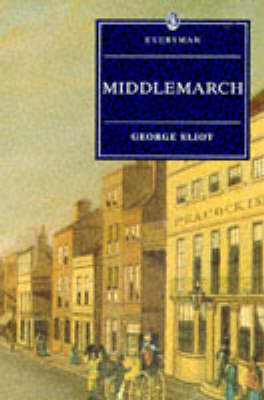
Middlemarch
Fiction & Poetry, Classics & Modern Classics
George Eliot (author) , Margaret Harris (volume editor)
Paperback Published on: 06/01/1997
Price: £2.99