


Reviews: Offline (1)
“Good overview on how tech companies want to keep you hooked”
(Paperback)
Imran Rashid is an IT entrepreneur and family physician who served as Head of Innovation for Aleris-Hamlet Private Hospitals. Soren Kenner is an on-line marketeer and entrepreneur who used to chair McCann MRM EMEA. Although sloppily written at times and somewhat general, this is an informative look at how tech companies work to keep your attention on their product and the adverse affects this might have on your emotional and mental health.
The book starts by providing an overview of the tech industry, which I have to say I found a bit sloppy, e.g. the authors keep comparing different companies’ worths with the GDP of various countries to the point where it became meaningless - they have the GDP of Germany! Italy! The Netherlands! I know there’s a trend in non-fiction to repeat points two or three times to make sure the reader remembers them, but I found it a bit much. More interesting is the section on the working of the brain and consciousness - notably the sections explaining prefiltering and neuroplaticity and I was particularly interested in how this ties in with how the brain produces oxytocin and dopamine and its need to get constant hits of the same.
Rashid and Kenner then pull and how all of this affects the attempts of tech companies to maintain your attention, which to me is the real meat of this book and I wished that the authors had spent longer on it. B J Fogg’s work on “captology” helped to explain how internet commerce sites work and are designed with the authors giving real life illustrations to show how it works, including tracking cookies. I found the comparison of phones to slot machines frighteningly convincing with the design and notification functions intended to keep grabbing your attention and bringing you back to the phone. Also frightening are the sections on influencing behaviour and the work of Cambridge Analytica, although it’s interesting that the authors draw no real conclusions on the effectiveness of such campaigns. However I would have liked some more detail on the different techniques used because it all seemed very high level.
The book then moves on to the adverse effects of using technology such as cyberbullying, the effect on empathy levels, depression, sleep disturbance and stress. There were no great surprises here if you’ve read the newspapers but the authors lay the potential effects out in an easy to follow way. The authors then move onto some practical tips to reduce your dependence on your phone or iPad, which had some interesting suggestions such as mapping how you currently spend your time and on what and then working out your triggers for when you reach for the phone.
Ultimately, the value in this book is in how Rashid and Kenner have pulled together a lot of information on a complicated (and controversial) subject that affects so many people’s lives - especially in this COVID-19 times when many people - myself included - have found ourselves using social media and the internet more. Although the writing is sloppy in places (with the authors sometimes contradicting themselves across a couple of pages) and I wanted more on the techniques used by tech companies to keep you hooked, the authors cite a lot of research here and clearly know the subject well so if you’re looking for a good general overview that pulls the various elements of the subject together, then this is a decent place to start.
Page of 1
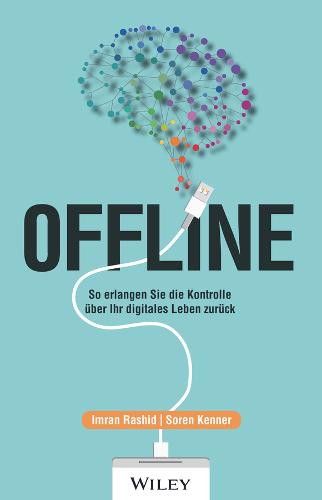
Offline: So erlangen Sie die Kontrolle über Ihr digitales Leben zurück
Imran Rashid (author) , Soren Kenner (author) , Birgit Reit (translator)
Hardback Published on: 04/03/2020
Price: £17.99