


Reviews: Process Theology: A Guide for the Perplexed (1)
“Badly formatted, impenetrable jargon, word-based intuiter assumes you can keep up”
(Paperback)
This is another in the series (like “Atonement: A Guide for the Perplexed”, A J Johnson, see elsewhere) that actually makes the issue worse rather than better.
The first set of problems arise from the formatting: or more to the point, the complete lack of any formatting. It is as if the advances in understanding different learning / teaching methods have passed the publishers by. One has page after page after page of dense text: minimal white space, only a few sub-headings, absolutely no diagrams or pictures, no bullet pointed lists, ‘firstly’, ‘secondly’, etc hidden in the text rather than starting the paragraph so that one can find the salient points, no highlight boxes or sidebars, and no summary sections.
Secondly, jargon is just introduced and swept over. There is no glossary, nor are technical terms properly explained with examples, eg p135 “objective immortality” and “subjective immortality”. How is it removing perplexedness to just throw these in with a cursory explanation and then carry on as it we have understood them immediately ?
Both of these points mean that the book is only of use to word-based intuiters: picture thinkers, dyslexics, sensors, list-lovers, etc need not apply. Those who are these alternative thinking types will know the tedious bullying, smugness, and accusations of limited intellect that accompanies word-based intuiters thinking they’re the only learning style that matters or counts.
As such, it is difficult for me to extract the necessary information, and reading this book was like eating five Weetabix with no milk. As mine is a library copy, I was not able to scribble notes all over it, especially the meanings of the jargon words, nor could I go through the text and write (1), (2), etc in the margins so that I could actually find where the multiple points of an argument are. Is this not the purpose of bullet points, indentations, bold type, etc ?
The first half was read alternating with Veli-Matti Karkkainen’s “The Trinity: Global Perspectives”, and that combination seemed to work well. So, if you’re thinking of trying this book, perhaps reading it alongside another one on a related subject might help.
I can’t tell you about Epperley’s line of argument, or how he compares with other process theologians, because he just goes on and on and on, as word-based intiuters tend to (eg Dulles, “Models of Revelation”, or Belenky’s “Women’s ways of Knowing”), leaving one to just try and pick random points out from a tidal wave of words.
This book will remain opposed to its intentions until the publishers get a short, sharp course in alternative teaching / learning methods and re-format the information so that more people of different leaning styles can actually get what they need in a format they can actually understand it.
Page of 1
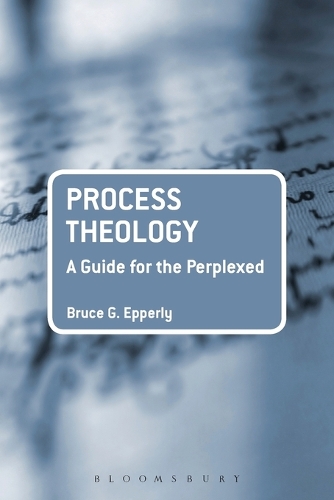
Process Theology: A Guide for the Perplexed
Non-Fiction, Religion & Spirituality, Religion, Spirituality
Dr Bruce G. Epperly (author)
Paperback Published on: 24/03/2011
Price: £25.99