


Reviews: Queer (2)
“Queer”
(Paperback)
At its heart, William Burroughs’ Queer is a tale about the desperation and despair of unrequited love. It begins where Junky left off, with Burroughs’ literary alter ego William Lee skulking around Mexico City in the company of American ex-pats, barflies and dilettante students. Having drastically cut back on the junk, Lee is no longer insulated from his true feelings and becomes obsessed with sex and relationships, eventually fixating his suffocating attention on a young American named Eugene Allerton. Lee pursues Allerton through the bars and backwaters of Mexico City, attempting to enrapture him with a serious of booze-fuelled, increasingly manic sermons on life and truth. Allerton ultimately gives in to Lee’s pursuit and becomes his lover but, without the security provided by a mind clouded by junk, Lee cannot ignore the disinterest and even contempt that Allerton actually feels for him. In a bid to fight off the reality of the situation, Lee takes his reluctant lover to Ecuador on a pilgrimage in search of the legendary hallucinogenic drug Yage.
In his introduction to the 25th anniversary edition, Oliver Harris provides a neat overview of Burroughs oeuvre and of Queer’s place within it. He remarks that, since there are no “straight” books in William Burroughs’ oeuvre – any one of them might be called Queer – his second novel is perversely typical and fulfils the meaning of the title as noun (homosexual – used pejoratively or with pride), adjective (peculiar, false, dubious) and verb (to thwart, unnerve, unsettle). Queer is certainly at times a perplexing novel, no doubt due in no small part to its being the most obviously personal of all Burroughs’ works. While Junky was also a heavily autobiographical novel, both Burroughs the writer and the substitute that he employs in the story were at the height of their narcotics addictions. They were consumed with thoughts of junk and so had very little personality to share. However, in common with the William Lee character, Burroughs was making only limited use of drugs at the time of Queer and so couldn’t hide from his own true feelings and conflicts. His struggle with his own homosexuality is reflected in the thoughts and actions of Lee and so, given the importance of “queerness” in his life at that time, it is no surprise that the title Queer was reserved and best-suited to this second novel.
Further insight into just how personal Queer was, and also how important the novel was in Burroughs’ development as both an author and a person, can be found in his own introduction to the 1985 edition of Queer which is included at the end of this edition. In it Burroughs vividly recounts losing the comforting, emotion-dulling blanket provided by the junk and, far more poignantly, acknowledges that he began writing Queer just eight months after he accidentally shot and killed his wife, Joan Vollmer. Burroughs comments that “the book is motivated and formed by an event which is never mentioned, in fact carefully avoided: the accidental shooting death of my wife, Joan, in September 1951” and goes on to confess that he is “forced to the appalling conclusion that [he] would never have become a writer but for Joan’s death.” The amount of raw emotion displayed in Queer should therefore come as no surprise. The dark, melancholy cloud that seems to hang over William Lee in the story reflects, whether intentionally or otherwise, the turmoil that Burroughs himself was experiencing at this point. While Queer is less well-known than both Junky and Naked Lunch, it is arguably Burroughs’ most powerful novel.
Although Queer is a fairly straightforward, linear story in the same vein as Junky, it does offer an insight into the literary style that Burroughs’ would adopt for his later novels. When Lee begins going through his “Routine”, that being the telling of his fantastical stories in an attempt to woo Allerton, there is a sense of the way Burroughs’ writing was to develop from the linear, commonsensical style of the majority of the Queer narrative to the experimental, almost schizophrenic style of Naked Lunch and other later works.
Queer is unflinchingly personal but also sparklingly political. A seemingly realistic narrative that breaks into the wildest fantasies, it chronicles a startlingly intense period in the life of William Burroughs, a troubled and fascinating man.
“heartbreaking short read”
(Paperback)
i rly enjoyed this book overall, it wasn’t what i was expecting but instead of a romance, it really took a deep dive into concepts of unrequited love and mainly, in my opinion focuses on the act of chasing highs and craving (attention, love and drugs are the main focus), the protagonists dependency on drugs shows to be more the main focus of the novel as he progresses to realise he is not going to receive the love he craves, when the protagonist leans more into drug addiction, burroughs demonstrates lee’s detachment from his own life and childhood when he describes outer body experiences and re lives flashbacks from “a body that isn’t his”, lee also explores ideas of wanting to live but he feels as if he can’t through his body, maybe linking to lee’s list for life or the lack of a queer scene so he can act freely in his own body. burroughs writes in a beautifully and heartbreakingly descriptive manner which i thought really effectively portrays the struggles of queer culture and experiences in the 1950s.
here are some of my favourite quotes from the book :
“instead a leer of naked lust, wrenched in the pain and hate of his deprived body and, in simultaneous double exposure, a sweet child’s smile of liking and trust shockingly out of time and place, mutilated and hopeless”
“to breathe with his lungs”
“a blind worm hunger”
“in deep sadness there is no place for sentimentality”
“like a predatory fish cut off from its pray through a glass wall”
“rocking queer so queer it rocked you”
Page of 1
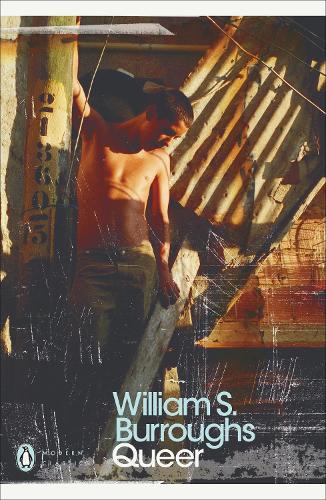
Queer: 25th Anniversary Edition
Fiction & Poetry, Modern & Contemporary Fiction
William S. Burroughs (author) , Oliver Harris (author of introduction)
Paperback Published on: 25/11/2010
Price: £10.99