


Reviews: The Chief (2)
“Hugless Douglas”
(Hardback)
It’s customary when praising any biographical study to say that it brings its subject alive, that it makes us feel closer to him. The worst errors about Douglas Haig come from precisely this approach. To see him more clearly, we have to stand back. Those who persist in judging him by standards he would not have recognised and to which he cannot be held accountable do a great disservice to historical debate. As Gary Sheffield shows in this perceptive, compelling, and fair-minded book ‘The Chief’, Haig was a product of his time. He didn’t give little pep talks before each battle; he didn’t hug wounded soldiers; he didn’t put smiley faces in his despatches. If he had, or perhaps written a wee poem telling us how monstrous he found the whole business of warfare, his reputation would surely stand higher today. In popular culture at any rate, it could hardly stand any lower.
Among historians however, there is a growing consensus, based on fresh research, and a renewed appreciation for the difficulties with which all commanders of the First World War had to grapple, that Haig’s achievements were as substantial as his burden was onerous. Arguably, as Sheffield says, ‘he simply had too much to do’. In modern terms, the C-in-C of the British Expeditionary Force wore a number of different hats: Army Group Commander, Theatre Commander, and National Contingent Commander. These jobs today would be split between two or even three individuals. Much of his daily workload was devoted to the dull but necessary demands of logistics, training, and liaison. We sometimes forget that the British Army went to France as part of a coalition: not all its battles were with the Germans. Haig was singularly unlucky to have as his allies a series of French generals who told him where to fight, often when he had neither the shells nor the men to secure victory, and to have in Lloyd George a prime minister who conspired against him at every turn, seeking at one point to place him under direct French command.
We should not exonerate Haig of all charges. Crucial among them is what used to be called ‘grip’. Pre-war doctrine held that the man on the spot was always better placed than his superiors to judge and respond to any situation. Where units were separated by hundreds of miles of desert or veldt, this was unarguably the case. Haig was seldom more than a car journey away from his army commanders. On too many occasions though, he just let them get on with it. Sheffield argues convincingly that Haig’s interventions in August 1918, when he pressed his subordinates to take advantage of the German collapse, were of critical importance. So why did he fail to intervene at the Somme? If he had instructed 4th Army to commit its reserves after it broke through the German line on July the 1st, instead of hanging around Rawlinson’s HQ as a spectator, that infamous day would have had a very different outcome. As he said afterwards, “Well, we were all learning”.
Insouciance bordering on pathological idiocy, you might think. That doesn’t stop it being true. The thing to remember about the Western Front is that warfare on this scale, in the absence of effective communication and armour, was hardly conducive to tactical genius. There were no Alexanders in this war because the conditions in which an Alexander might have flourished did not exist. Nor was there the necessary infrastructure to press home localised success: it was difficult enough to transport the guns from one part of the line to another, never mind making them go forward. In Sheffield’s words, ‘During the Somme, and arguably until the end of the war, the BEF was incapable of conducting any sort of offensive operations that were economical in human lives’. Haig recognised at an early stage that he would only prevail by attrition: pounding the German army along the whole front until it rocked on its heels, then pounding it some more. It wasn’t pretty. By God, it wasn’t pretty. But it worked.
“Hugless Douglas”
(Paperback)
It’s customary when praising any biographical study to say that it brings its subject alive, that it makes us feel closer to him. The worst errors about Douglas Haig come from precisely this approach. To see him more clearly, we have to stand back. Those who persist in judging him by standards he would not have recognised and to which he cannot be held accountable do a great disservice to historical debate. As Gary Sheffield shows in this perceptive, compelling, and fair-minded book ‘The Chief’, Haig was a product of his time. He didn’t give little pep talks before each battle; he didn’t hug wounded soldiers; he didn’t put smiley faces in his despatches. If he had, or perhaps written a wee poem telling us how monstrous he found the whole business of warfare, his reputation would surely stand higher today. In popular culture at any rate, it could hardly stand any lower.
Among historians however, there is a growing consensus, based on fresh research, and a renewed appreciation for the difficulties with which all commanders of the First World War had to grapple, that Haig’s achievements were as substantial as his burden was onerous. Arguably, as Sheffield says, ‘he simply had too much to do’. In modern terms, the C-in-C of the British Expeditionary Force wore a number of different hats: Army Group Commander, Theatre Commander, and National Contingent Commander. These jobs today would be split between two or even three individuals. Much of his daily workload was devoted to the dull but necessary demands of logistics, training, and liaison. We sometimes forget that the British Army went to France as part of a coalition: not all its battles were with the Germans. Haig was singularly unlucky to have as his allies a series of French generals who told him where to fight, often when he had neither the shells nor the men to secure victory, and to have in Lloyd George a prime minister who conspired against him at every turn, seeking at one point to place him under direct French command.
We should not exonerate Haig of all charges. Crucial among them is what used to be called ‘grip’. Pre-war doctrine held that the man on the spot was always better placed than his superiors to judge and respond to any situation. Where units were separated by hundreds of miles of desert or veldt, this was unarguably the case. Haig was seldom more than a car journey away from his army commanders. On too many occasions though, he just let them get on with it. Sheffield argues convincingly that Haig’s interventions in August 1918, when he pressed his subordinates to take advantage of the German collapse, were of critical importance. So why did he fail to intervene at the Somme? If he had instructed 4th Army to commit its reserves after it broke through the German line on July the 1st, instead of hanging around Rawlinson’s HQ as a spectator, that infamous day would have had a very different outcome. As he said afterwards, “Well, we were all learning”.
Insouciance bordering on pathological idiocy, you might think. That doesn’t stop it being true. The thing to remember about the Western Front is that warfare on this scale, in the absence of effective communication and armour, was hardly conducive to tactical genius. There were no Alexanders in this war because the conditions in which an Alexander might have flourished did not exist. Nor was there the necessary infrastructure to press home localised success: it was difficult enough to transport the guns from one part of the line to another, never mind making them go forward. In Sheffield’s words, ‘During the Somme, and arguably until the end of the war, the BEF was incapable of conducting any sort of offensive operations that were economical in human lives’. Haig recognised at an early stage that he would only prevail by attrition: pounding the German army along the whole front until it rocked on its heels, then pounding it some more. It wasn’t pretty. By God, it wasn’t pretty. But it worked.
Page of 1
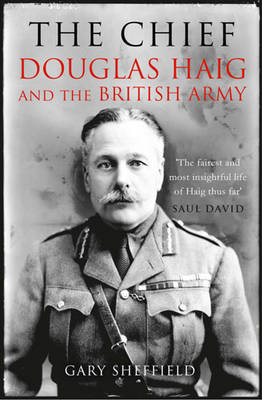
The Chief: Douglas Haig and the British Army
Non-Fiction, History & Politics, Military History, The First World War
Hardback Published on: 01/09/2011
Price: £25.00