


Reviews: The Dead Hand (3)
“Nuclear and Present Danger”
(Hardback)
“I had never bought into Reagan’s ‘Evil Empire’ thing”, recalls weapons inspector Andy Weber. “I was a product of liberal eastern schools, I went to Cornell, but there it was. I was face to face with evil”. The year was 1995. The Cold War had finished four years previously with the Soviet Union’s collapse. Weber and his team were assigned to Kazakhstan to find out just what unpleasant surprises the politburo had left behind. What they found was worse than anyone had feared. What they found was anthrax.
Germ warfare had been officially banned in 1972. Over 70 nations renounced its use, and pledged to destroy any remaining stock. The Russians, assuming it didn’t apply to them, and that the Americans would certainly break the ban anyway, carried on regardless. By the mid 80s, a Soviet scientist, Sergei Popov, had developed pathogens that would turn the human body’s defences against its own nervous system. First paralysis, then death.
‘The Dead Hand’ reveals this monstrous apparatus of destruction in full. It combines the pace of a Tom Clancy thriller with the latest investigative research to show how close, how agonisingly close, we came to Armageddon. The title refers to the semi-automated Doomsday machine the Russians created in the early 80s, at a time when the greatest threat to command and control was their own ailing leadership. Never mind getting Andropov or Chernenko out of the Kremlin, it was difficult enough to get them out of bed.
The solution they came up with was known as Perimeter. In the event that Comrade General Secretary was too senile, too nervous or too drunk to press the button, the burden was shifted to a few duty officers buried hundreds of feet underground in reinforced concrete globes. At their word, command rockets would fly over Russia, broadcasting launch codes to every single remaining missile, which would then blast off on their pre-programmed routes to the west. If Reagan was really considering a pre-emptive strike, as the politburo had convinced themselves he was, Perimeter would certainly have made him think twice. But such was their idiocy and paranoia that they kept the whole thing under wraps. Did it not occur to them that a secret deterrent is a contradiction in terms?
Reagan, of course, was considering no such thing. If there is anybody who still thinks he was a trigger-happy geriatric cowboy, David Hoffman’s book will bury that pernicious myth for good. Right from the start of his presidency, he was writing letters to Soviet leaders pleading for peace and understanding. As he said to Nancy though, “They keep dying on me”. He, and the world, had to wait for Gorbachev. What a partnership: Reagan, the arch-conservative who dreamed of a world without nuclear weapons; Gorbachev, the man who was meant to reform the Soviet Union, yet presided more or less voluntarily over its disintegration.
Hoffman’s portrayal of the Soviet Union’s final years is masterful: ‘The bureaucrats arrogantly issued orders to do this and that, and on the ground in farms and cities, the orders often made no sense. The demands were ignored, statistics faked, budgets swallowed up with no result, and anyone who deviated was punished’. In truth, no amount of Perestroika could have saved this crumbling behemoth. Its final implosion required only the gentlest of touches. All Reagan had to do was announce a space programme so expensive, so implausible, and so far beyond any known technology that the Russians’ attempts to counter it would guarantee bankruptcy. And that, my beloved ‘earers, is what the Strategic Defence Initiative, or Star Wars, was all about.
2010 marks the 100th anniversary of Reagan’s birth, and the 80th of Gorbachev’s. This fine account, the most impressive I have yet read on the ending of the Cold War, reminds us of the tremendous debt we owe them both. Happy birthday, Ron. Happy birthday, Mikhail Sergeyevich.
“Fascinating insight into what really happened”
(Paperback)
A look behind the scenes into what was really going on behind the scenes as Reagan and Gorbachev faced the prospect of nuclear annihilation and set out on the road to disarmament. Well researched, well written - really enjoyed it.
“Nuclear and Present Danger”
(Paperback)
“I had never bought into Reagan’s ‘Evil Empire’ thing”, recalls weapons inspector Andy Weber. “I was a product of liberal eastern schools, I went to Cornell, but there it was. I was face to face with evil”. The year was 1995. The Cold War had finished four years previously with the Soviet Union’s collapse. Weber and his team were assigned to Kazakhstan to find out just what unpleasant surprises the politburo had left behind. What they found was worse than anyone had feared. What they found was anthrax.
Germ warfare had been officially banned in 1972. Over 70 nations renounced its use, and pledged to destroy any remaining stock. The Russians, assuming it didn’t apply to them, and that the Americans would certainly break the ban anyway, carried on regardless. By the mid 80s, a Soviet scientist, Sergei Popov, had developed pathogens that would turn the human body’s defences against its own nervous system. First paralysis, then death.
‘The Dead Hand’ reveals this monstrous apparatus of destruction in full. It combines the pace of a Tom Clancy thriller with the latest investigative research to show how close, how agonisingly close, we came to Armageddon. The title refers to the semi-automated Doomsday machine the Russians created in the early 80s, at a time when the greatest threat to command and control was their own ailing leadership. Never mind getting Andropov or Chernenko out of the Kremlin, it was difficult enough to get them out of bed.
The solution they came up with was known as Perimeter. In the event that Comrade General Secretary was too senile, too nervous or too drunk to press the button, the burden was shifted to a few duty officers buried hundreds of feet underground in reinforced concrete globes. At their word, command rockets would fly over Russia, broadcasting launch codes to every single remaining missile, which would then blast off on their pre-programmed routes to the west. If Reagan was really considering a pre-emptive strike, as the politburo had convinced themselves he was, Perimeter would certainly have made him think twice. But such was their idiocy and paranoia that they kept the whole thing under wraps. Did it not occur to them that a secret deterrent is a contradiction in terms?
Reagan, of course, was considering no such thing. If there is anybody who still thinks he was a trigger-happy geriatric cowboy, David Hoffman’s book will bury that pernicious myth for good. Right from the start of his presidency, he was writing letters to Soviet leaders pleading for peace and understanding. As he said to Nancy though, “They keep dying on me”. He, and the world, had to wait for Gorbachev. What a partnership: Reagan, the arch-conservative who dreamed of a world without nuclear weapons; Gorbachev, the man who was meant to reform the Soviet Union, yet presided more or less voluntarily over its disintegration.
Hoffman’s portrayal of the Soviet Union’s final years is masterful: ‘The bureaucrats arrogantly issued orders to do this and that, and on the ground in farms and cities, the orders often made no sense. The demands were ignored, statistics faked, budgets swallowed up with no result, and anyone who deviated was punished’. In truth, no amount of Perestroika could have saved this crumbling behemoth. Its final implosion required only the gentlest of touches. All Reagan had to do was announce a space programme so expensive, so implausible, and so far beyond any known technology that the Russians’ attempts to counter it would guarantee bankruptcy. And that, my beloved ‘earers, is what the Strategic Defence Initiative, or Star Wars, was all about.
2011 marks the 100th anniversary of Reagan’s birth, and the 80th of Gorbachev’s. This fine account, the most impressive I have yet read on the ending of the Cold War, reminds us of the tremendous debt we owe them both. Happy birthday, Ron. Happy birthday, Mikhail Sergeyevich.
Page of 1
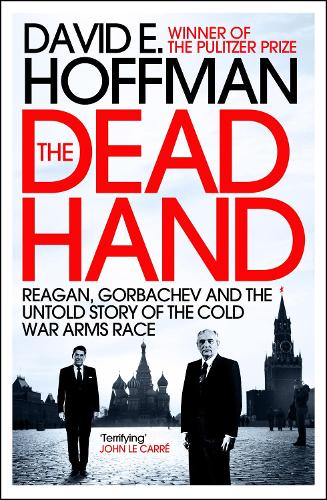
The Dead Hand: Reagan, Gorbachev and the Untold Story of the Cold War Arms Race
Non-Fiction, History & Politics, World History
David E. Hoffman (author)
Paperback Published on: 03/11/2011
Price: £10.99