


Reviews: Workers (3)
“Workers”
(Hardback)
In December 2007, during her second extended visit to Beijing, Helen Couchman photographed a large group of Chinese workers engaged in construction work in preparation for the 2008 Olympic Games. Couchman chose a specific group of labourers, those building the vast bird's nest stadium and swimming pool. The 143 portraits that resulted each show a single worker standing in front of these incredible structures, looking calmly, confidently and directly into Couchman's lens.But although she has photographed 143 individual men and women working at the Olympic site, the artist has, in a certain sense, taken only a single portrait, that of the worker engaged in making the Place of the Games. This location is, by definition, at the very heart of what has been regarded by many, both in the East and in the West, as the greatest event in China's history since the Communist Revolution of 1949.An important feature of these photographs is that, irrespective of their archival value, they were taken without involving the authorities. Couchman simply asked the workers themselves if they were willing to be photographed. What these pictures exemplify, then, is an independent project of observation and recording. Taken over two successive days, they are the product of an approach that is both casual and accomplished, ordered and organised yet open to the particular moment of their unusual circumstance.Each participant within Workers was asked to stand in roughly the same spot as all the others, with the Olympic stadium and pool clearly in view behind them. Couchman gave each worker a print of their own portrait for them to keep or to send home to their families outside Beijing. Thus the taking of these pictures involved a marked act of reciprocity and exchange. That Couchman supplied each individual with a copy of their portrait was significant and important, both for the artist and for the workers themselves. By this means Couchman addressed one of the most persistent functions of photography, that of establishing visual evidence, proof, in the present case, of having played a small but by no means insignificant part in something of major cultural, historical, and political importance for China, and for the West as well.WORKERS 工人By Helen CouchmanIntroduction by Peter Suchin, text in English/ChineseHardback, 152 pages, illustrated in colour, dimensions 2.5cm x 25.5cm x 21.5cm. 1kgProduced by Soloshow Publishing with the kind support of ArupFirst Edition, 2008ISBN 978-0-9560172-0-8For more info see: www.soloshowpublishing.com
“ 'Photographer puts faces to the construction of the Games sites'”
(Hardback)
They may have helped build two of the most significant structures in modern Chinese history – the National Stadium and the National Aquatics Centre – for the BJ Olympics, but the thousands-strong workforce has remained faceless. Until now.
A group of 143 men and women from provinces as far away as Gansu and Sichuan posed for British artist Helen Couchman’s latest project, a book called Workers, which attempts to put a face to the mammoth projects.
Before her lens some appear formal while others are nervous; some wear a poker face, but most beam a smile, amused and somewhat proud. The portraits all share the same backdrop – the venues known as the “Bird’s Nest” and the “Water Cube “.
Couchman said much of the news on the BJ Olympics had focused on landmark buildings, but, she reasoned, what about the people who actually welded the intricate steel structures together and put the many pieces in place?
“The Empire State Building and other historic buildings like the Eiffel Tower – we see photographs with [workers] in them, but we are not sure who they were,” said the 35-year-old, who moved to Beijing 19 months ago and has just begun to communicate with the locals in broken Chinese.
“When you photograph people as individuals, they become memorable. They are no longer a group, a mass, an unknown quantity.”
British art critic Peter Suchin writes in the book’s introduction that the way Chinese positions the workers at roughly the same spot for each portrait suggests they can also be seen as “one single portrait, that of `the worker’ engaged in the making of the Place of the Games … the central focus, the essential signifier of the new BJ”.
Couchman, who received her master of fine arts degree from Central Saint Martins College of Art and Design in London, said she had always been interested in portraying urban landscapes through various media.
Her previous works in Beijing include collages in ink, and woodblock prints depicting features of a new city, such as high rises and ring roads, using traditional Chinese motifs.
For this project though, her shift in focus had much to do with the hype surrounding the architecture of the two main Olympic venues.
She said she wanted to go back to the fundamental question of what the Games meant to BJ and the nation.
“I’ve always done work about overlooked landscapes,” Couchman said.
“But here everyone is talking about the buildings, the buildings that are going to represent the new China.
“So for me, the workers became the ones who were overlooked.”
Taking the 143 photographs formed only half the project. The other half involved putting the images into a book to provide interesting details of how Couchman carried out her project, and a wealth of information about the workers that lends significance to the artist’s work.
For two days last December, Couchman dodged tight security and sneaked into the construction site of the “Water Cube”, offering to take pictures of workers.
Those who agreed to take part were each promised a copy of the photograph to take home.
So after the pictures were developed, she sneaked back to distribute them.
Those who heard about the return of the foreigner photographer showed up to collect their pictures, and signed Couchman’s “autograph” book.
A handful never came back. Some had already returned home, the other workers said.
She adopted a presentation format reminiscent of Chinese painter Liu Xiaodong’s ‘Battlefield Realism: The Eighteen Arhats’, which features signed portraits of nine pairs of soldiers from the mainland and Taiwan.
Each labourer wrote their names on the original prints, and the autographs effectively tell the story of how far the workers travelled and the transient lifestyle they lead as migrant workers.
The details provide the human touch – such as how one wrote her surname in the wrong character and crossed it out, and others who practised writing their names on the backs of their hands first, or with help from friends. They indicate the limited education received by these workers, still the hardest-working toilers at the bottom of the new Chinese social order.
Couchman fully expected workers’ rights to be raised in panel discussions during the book’s launch in BJ this month.
However, she was taken aback by the ferocity of a question on whether her work had glossed over workers’ conditions on the mainland, often cited as an example of the nation developing too recklessly with little regard to the human cost.
“It’s good if my work raises awareness [of workers’ conditions]; however, it was not my reason for starting this project,” Couchman said.
“If I had aimed to make this project about workers’ rights, it would not be what it is.”'
by Ng Tze-wei, South China Morning Post
“ 'Photographer puts faces to the construction of the Games sites'”
(Hardback)
They may have helped build two of the most significant structures in modern Chinese history – the National Stadium and the National Aquatics Centre – for the BJ Olympics, but the thousands-strong workforce has remained faceless. Until now.
A group of 143 men and women from provinces as far away as Gansu and Sichuan posed for British artist Helen Couchman’s latest project, a book called Workers, which attempts to put a face to the mammoth projects.
Before her lens some appear formal while others are nervous; some wear a poker face, but most beam a smile, amused and somewhat proud. The portraits all share the same backdrop – the venues known as the “Bird’s Nest” and the “Water Cube “.
Couchman said much of the news on the BJ Olympics had focused on landmark buildings, but, she reasoned, what about the people who actually welded the intricate steel structures together and put the many pieces in place?
“The Empire State Building and other historic buildings like the Eiffel Tower – we see photographs with [workers] in them, but we are not sure who they were,” said the 35-year-old, who moved to Beijing 19 months ago and has just begun to communicate with the locals in broken Chinese.
“When you photograph people as individuals, they become memorable. They are no longer a group, a mass, an unknown quantity.”
British art critic Peter Suchin writes in the book’s introduction that the way Chinese positions the workers at roughly the same spot for each portrait suggests they can also be seen as “one single portrait, that of `the worker’ engaged in the making of the Place of the Games … the central focus, the essential signifier of the new BJ”.
Couchman, who received her master of fine arts degree from Central Saint Martins College of Art and Design in London, said she had always been interested in portraying urban landscapes through various media.
Her previous works in Beijing include collages in ink, and woodblock prints depicting features of a new city, such as high rises and ring roads, using traditional Chinese motifs.
For this project though, her shift in focus had much to do with the hype surrounding the architecture of the two main Olympic venues.
She said she wanted to go back to the fundamental question of what the Games meant to BJ and the nation.
“I’ve always done work about overlooked landscapes,” Couchman said.
“But here everyone is talking about the buildings, the buildings that are going to represent the new China.
“So for me, the workers became the ones who were overlooked.”
Taking the 143 photographs formed only half the project. The other half involved putting the images into a book to provide interesting details of how Couchman carried out her project, and a wealth of information about the workers that lends significance to the artist’s work.
For two days last December, Couchman dodged tight security and sneaked into the construction site of the “Water Cube”, offering to take pictures of workers.
Those who agreed to take part were each promised a copy of the photograph to take home.
So after the pictures were developed, she sneaked back to distribute them.
Those who heard about the return of the foreigner photographer showed up to collect their pictures, and signed Couchman’s “autograph” book.
A handful never came back. Some had already returned home, the other workers said.
She adopted a presentation format reminiscent of Chinese painter Liu Xiaodong’s ‘Battlefield Realism: The Eighteen Arhats’, which features signed portraits of nine pairs of soldiers from the mainland and Taiwan.
Each labourer wrote their names on the original prints, and the autographs effectively tell the story of how far the workers travelled and the transient lifestyle they lead as migrant workers.
The details provide the human touch – such as how one wrote her surname in the wrong character and crossed it out, and others who practised writing their names on the backs of their hands first, or with help from friends. They indicate the limited education received by these workers, still the hardest-working toilers at the bottom of the new Chinese social order.
Couchman fully expected workers’ rights to be raised in panel discussions during the book’s launch in BJ this month.
However, she was taken aback by the ferocity of a question on whether her work had glossed over workers’ conditions on the mainland, often cited as an example of the nation developing too recklessly with little regard to the human cost.
“It’s good if my work raises awareness [of workers’ conditions]; however, it was not my reason for starting this project,” Couchman said.
“If I had aimed to make this project about workers’ rights, it would not be what it is.”'
by Ng Tze-wei, South China Morning Post
Page of 1
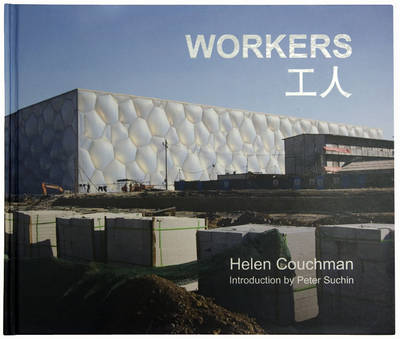
Workers: Gong Ren
Non-Fiction, Art, Design & Photography, Photography, Photographers
Helen Couchman (artist) , Helen Couchman (author) , Peter Suchin (author of introduction)
Hardback Published on: 14/06/2008
Price: £19.99